Feng Shui Colors Guide for Rooms and Elements
Learn Feng Shui colors by Five Elements, room purpose, Bagua context, and practical ways to choose color without fixed luck claims.
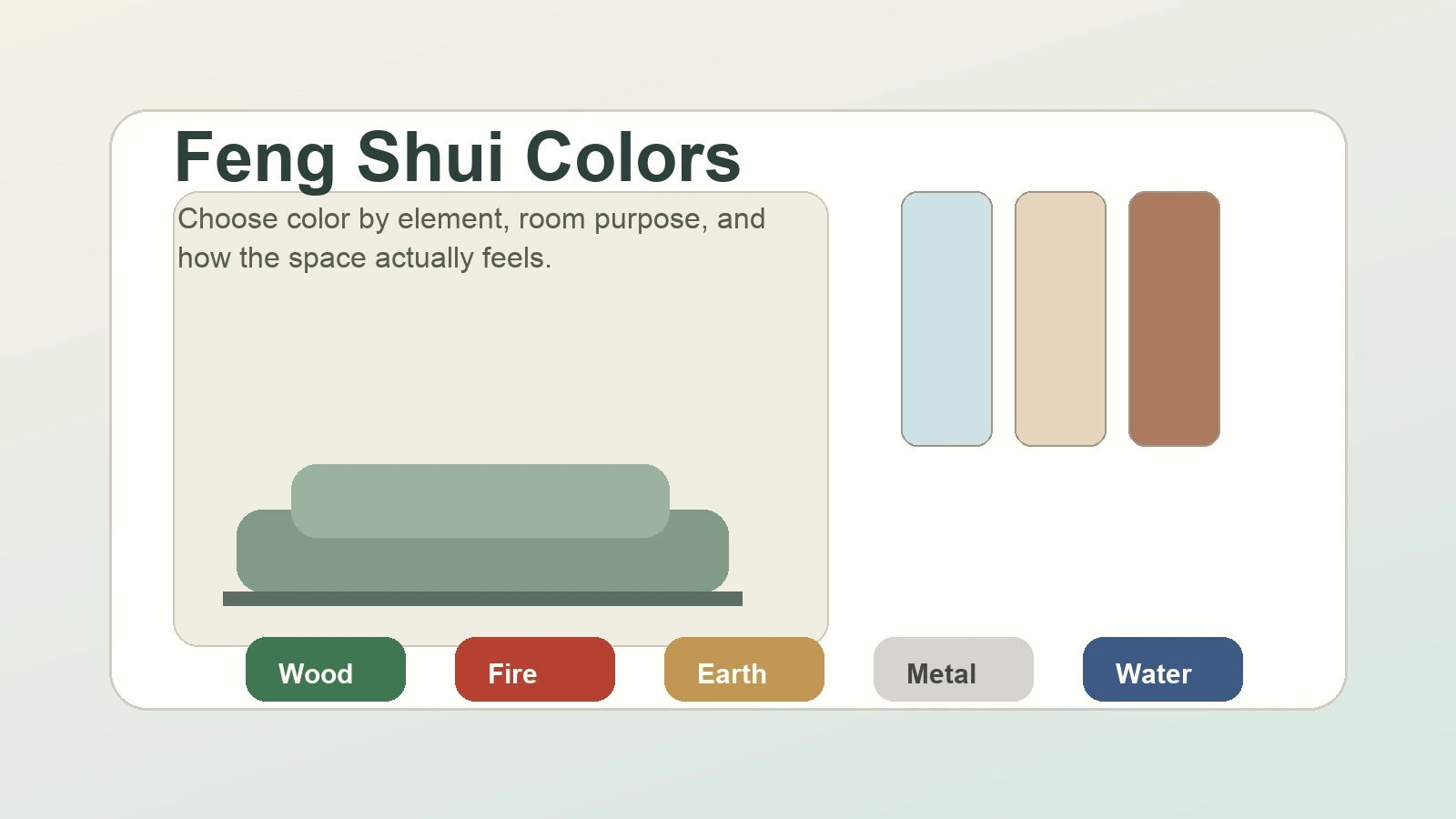
Feng shui colors are easiest to use when you read them as design signals, not magic formulas. A color can support the way a room feels, but it works best when the space already has good light, comfortable movement, and a clear purpose.
In Feng Shui, color is often connected with the Five Elements, Bagua areas, and room function. That gives you a useful vocabulary for choosing paint, textiles, art, and accents without treating one shade as a guaranteed source of luck.
Quick Color Answer
The best feng shui color is the one that supports the room's real job. Bedrooms usually need calm and recovery. Workspaces need focus without glare. Entries need clarity and welcome. Living rooms need enough warmth for gathering without feeling visually noisy.
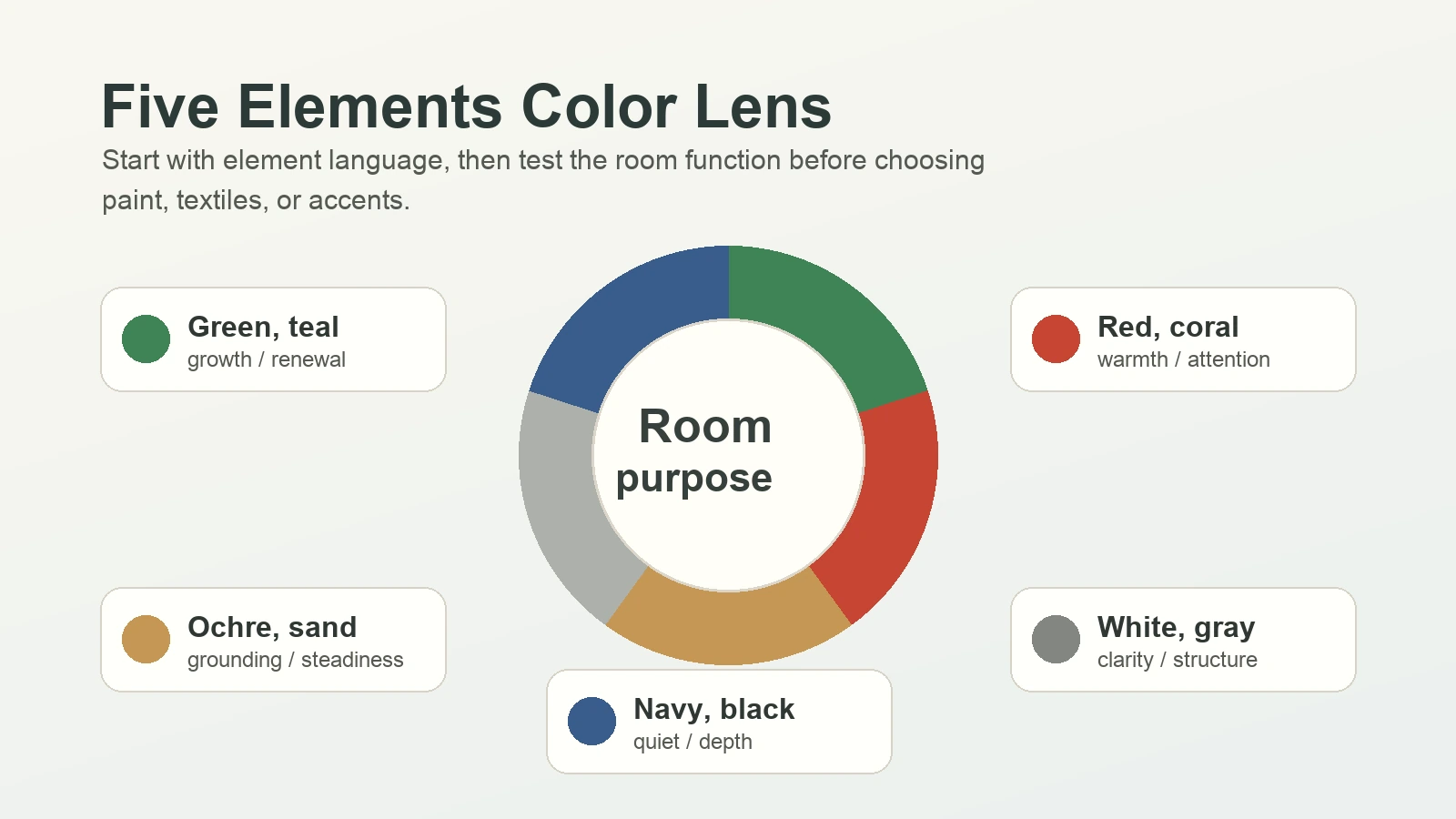
Use this table as a first pass:
| Element lens | Common color family | Better use | Watch point |
|---|---|---|---|
| Wood | Greens, teal, botanical tones | Growth, renewal, study, plant areas | Too much can feel busy or immature |
| Fire | Red, coral, orange, strong purple | Visibility, warmth, social energy | Can overstimulate bedrooms or tense rooms |
| Earth | Sand, ochre, terracotta, warm neutrals | Stability, rest, grounding, transitions | Can feel heavy if everything is beige |
| Metal | White, gray, silver, pale metallics | Clarity, order, focus, editing down | Can feel cold without texture or warmth |
| Water | Black, navy, deep blue, charcoal | Reflection, depth, quiet, flow | Can darken a small or low-light room |
The Five Elements in Feng Shui page is the best supporting Wiki reference for this article. It explains why color is only one layer beside material, shape, placement, and room use.
Choose By Element, Then Check The Room
Many Feng Shui color lists start with element associations. That is helpful, but it can become too rigid if you stop there. A green wall in a cramped, cluttered room does not automatically create growth. A red accent in a room where people already argue may add intensity instead of warmth.
The practical sequence is:
- Name the room's job.
- Notice the current feeling: dull, tense, cold, scattered, heavy, or balanced.
- Choose one main color family that supports the job.
- Add a smaller accent color if the room needs movement or contrast.
- Recheck light, clutter, walkways, and comfort before calling the choice finished.
The Bagua in Feng Shui can help when you want a spatial framework, but do not force every room into a color prescription. A Bagua sector is more useful when it clarifies the room's role than when it overrides how the space is actually used.
Room By Room Color Choices
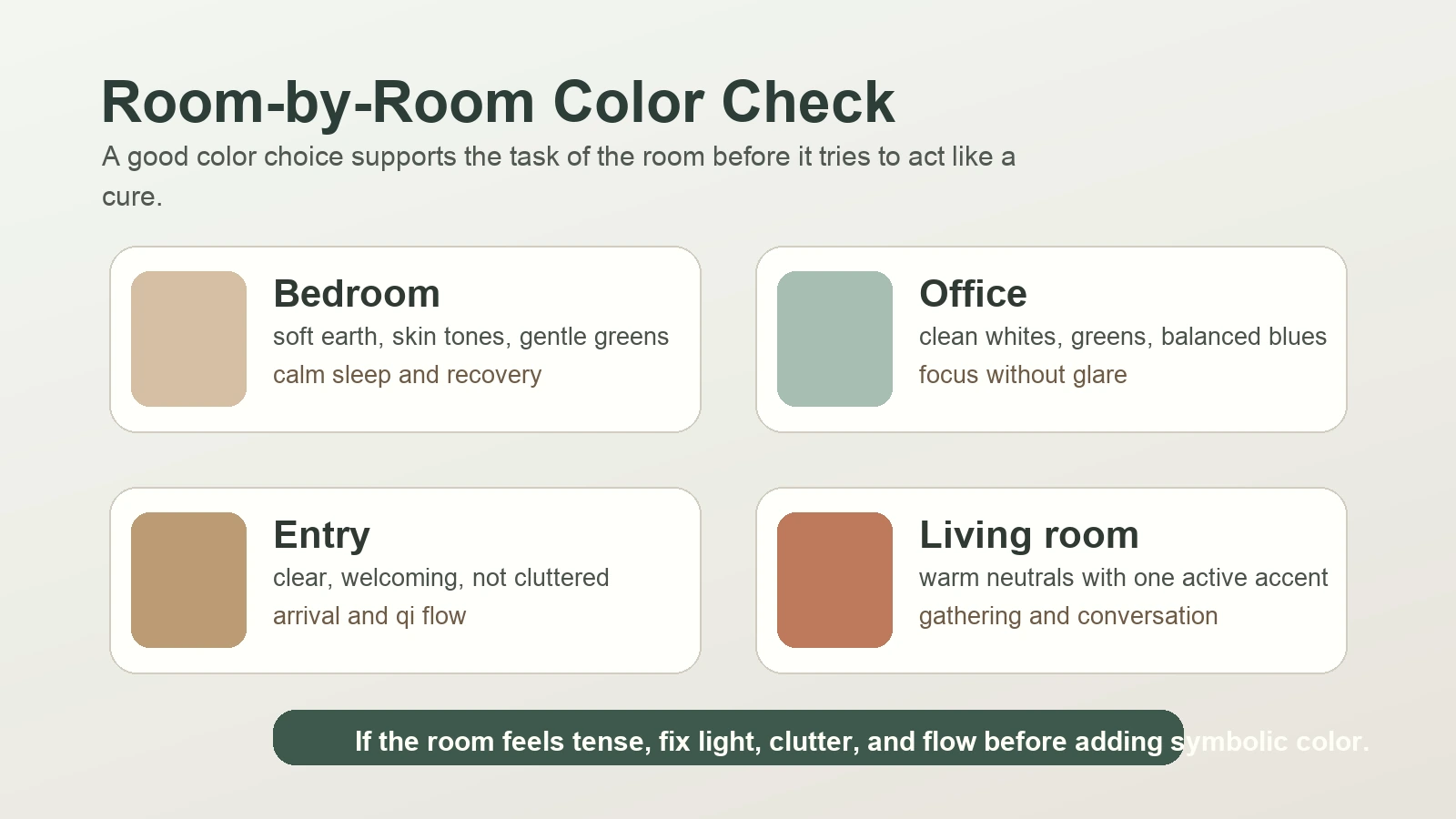
Different rooms need different color behavior. The same shade can feel supportive in one place and distracting in another.
| Room | Better color direction | Why it works | Link opportunity |
|---|---|---|---|
| Bedroom | Soft earth tones, skin tones, muted greens, quiet blues | Supports rest, softness, and a slower evening rhythm | Bedroom Feng Shui |
| Home office | Warm whites, balanced greens, pale blues, restrained Metal colors | Helps focus without making the desk feel harsh | desk window placement guide |
| Entry | Clear neutrals, clean Wood accents, warm lighting | Makes arrival feel organized and welcoming | Main Door |
| Living room | Warm neutrals plus one active accent | Keeps conversation open without overwhelming the room | south facing house guide |
| Wealth or plant corner | Healthy greens, natural wood, fresh light, one grounded accent | Supports care and upkeep rather than symbolic clutter | feng shui money tree guide |
This is also why "lucky colors" need context. A color that looks lucky in a yearly article can still be wrong for a dark hallway, a tiny bedroom, or a room where the furniture already creates tension.
Colors To Use Carefully
Some colors are not bad, but they ask for restraint.
- Strong red can be useful as a small accent, but it may be too stimulating for sleep or recovery.
- Large black surfaces can feel elegant, but they can also make a room heavy if natural light is weak.
- All-white rooms can feel clean, but they may become cold without natural texture, wood, art, or warm light.
- Too many symbolic colors in one room can make the space feel visually scattered.
- Color cures should not replace basic fixes like clearing a blocked entry, improving lighting, or moving furniture out of the main path.
The same caution appears in FateFolio's crystal element guide. Symbolic objects and colors work best after the physical room already supports the person using it.
Where FateFolio Fits
FateFolio's home Feng Shui map reading is useful when color is only one part of the question. A color palette may feel different depending on the home orientation, surrounding roads, visible forms, indoor scene type, goals, and the room's relationship to doors and windows.
Use a color guide when you are choosing paint or accents. Use a fuller home Feng Shui reading when you are trying to understand why a room feels blocked, exposed, dark, rushed, or unsettled even after the colors look pleasant.
FateFolio Feng Shui
Check color inside the full home context
Use FateFolio to review home surroundings, room function, qi flow, and practical Feng Shui patterns before turning one color rule into a fixed answer.
Practical Takeaway
Good feng shui colors should make the room easier to use and easier to settle into. Start with the Five Elements, then test the room's purpose, light, clutter, movement, and emotional tone.
If a color makes the space calmer, clearer, warmer, or more balanced, it is doing useful work. If it only matches a lucky-color list while the room still feels tense, the room is asking for a practical adjustment first.
FAQ
What are the main Feng Shui colors?
Feng Shui often groups colors through the Five Elements: Wood greens, Fire reds and warm brights, Earth yellows and neutrals, Metal whites and grays, and Water dark blues or black.
What is the best color for a bedroom in Feng Shui?
Many bedrooms do best with soft earth tones, gentle skin tones, muted greens, or quiet blues. The better test is whether the room feels restful, uncluttered, and comfortable at night.
Are red colors bad in Feng Shui?
No. Red is strong Fire energy, so it can be useful as an accent. Use it carefully in rooms that already feel tense, hot, loud, or overstimulating.
Should I choose colors by Bagua area?
Bagua can help, but it should not override the room's actual use. A bedroom, office, entry, and living room each need different color behavior even when a Bagua sector suggests a certain element.
Can FateFolio choose my exact lucky color?
FateFolio can help you think through Feng Shui context and broader metaphysics patterns. Treat color suggestions as reflective design guidance, not as a guaranteed luck formula.

About the editor
FateFolio Editorial
FateFolio Editorial
FateFolio Editorial writes plain-language notes on Bazi, I Ching, Feng Shui, readings, and timing—with the reasoning and limits kept in view.
Related posts
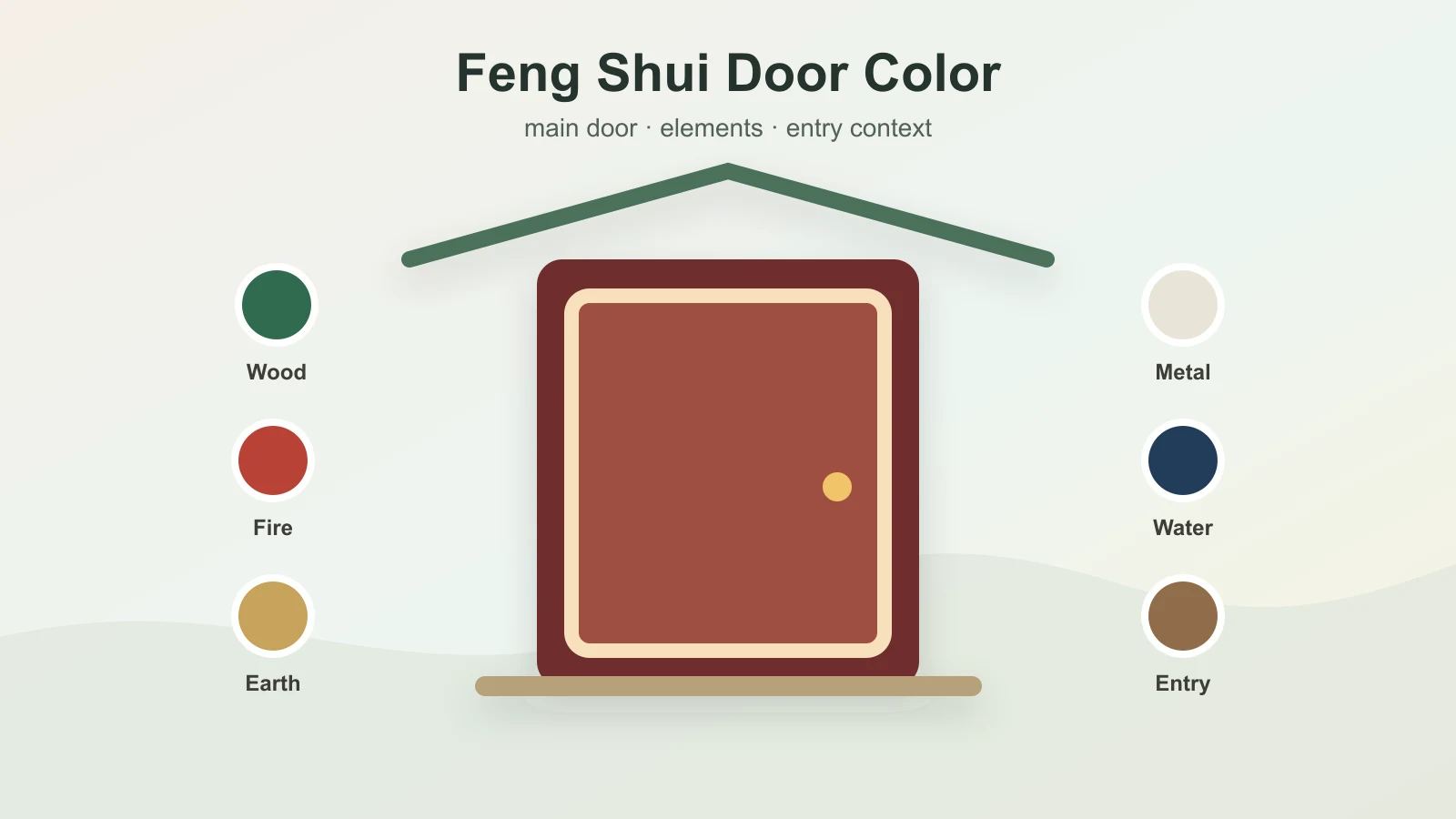
Feng Shui Door Color Guide for Front Entries
Choose a Feng Shui door color by facing direction, Five Elements, entry condition, and practical home context without fixed luck claims.
How to Balance the Metal Element in Feng Shui
Learn how to balance Metal in feng shui with colors, shapes, support elements, room checks, and reflective layout guidance.
Feng Shui Lighting Guide for Every Room
Use Feng Shui lighting to balance daylight, ambient, task, and bedroom light without glare, clutter, or one-size-fits-all luck claims.