Feng Shui Desk Window Perpendicular Placement Guide
Learn when a desk perpendicular to a window works in Feng Shui, what to adjust, and how to avoid glare, weak support, and blocked qi.
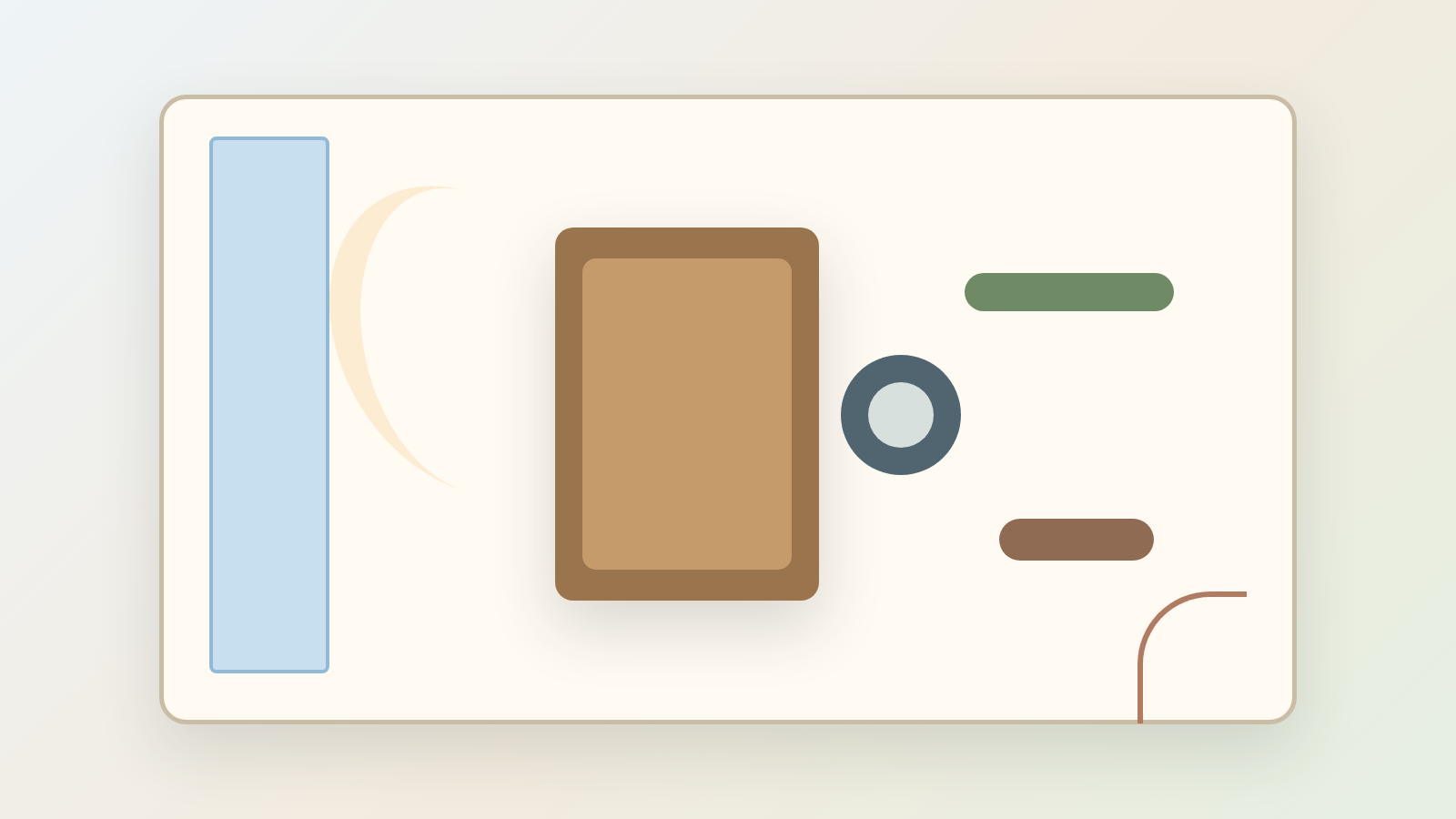
A desk perpendicular to a window can work well in Feng Shui when the window is at your side, your back has support, the door path is visible, and glare is controlled. It is often better than facing directly into a bright window or sitting with your back exposed to glass.
The goal is not to obey a rigid rule. The goal is to create a work position that feels steady, clear, and aware of the room.
When Perpendicular Placement Works
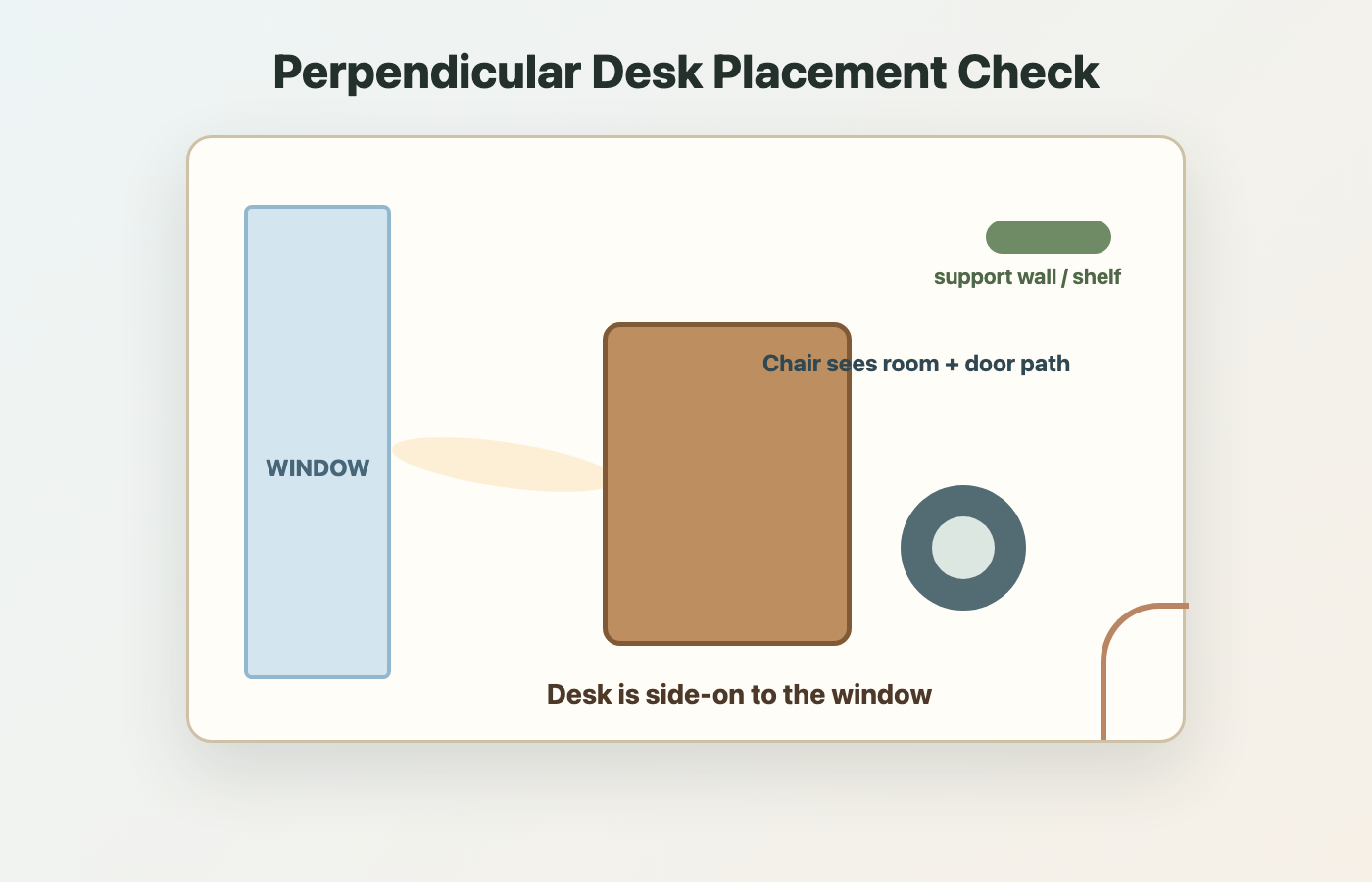
The best version of this layout is simple: the window runs along one side of the desk, your chair is not backed directly by the window, and you can see the main room or door area without twisting. In practical Feng Shui, this gives you light without making the window the whole focus.
This is close to the classic desk-position idea of being settled and alert. FateFolio's Desk Position wiki page explains the larger term. This article is narrower: it answers the window-perpendicular setup people run into in real home offices.
| Layout factor | Good sign | What to fix |
|---|---|---|
| Window position | Light comes from the side | Add shade if glare hits screen or eyes |
| Back support | Chair has a wall, cabinet, or stable area behind it | Avoid sitting with your back directly to glass |
| Door awareness | You can see movement into the room | Angle the monitor or chair slightly if needed |
| Desk surface | Work area stays clear and focused | Remove objects that pull attention to the window |
| Qi flow | Entry path is open | Do not block the doorway or walkway with the desk |
If your desk is perpendicular but your back is exposed, the placement is incomplete. Feng Shui reads the relationship between desk, chair, door, window, and wall, not one angle by itself.
The Command Position Still Matters
The command position is often summarized as "see the door, do not sit directly in line with it, and have support behind you." That is a useful shorthand, but it needs room-specific judgment.
For a window-side desk, ask:
- Can I notice someone entering the room without being startled?
- Is there a solid wall, shelf, cabinet, or stable zone behind my chair?
- Does the window light support work instead of pulling my attention away?
- Is the desk out of the main walking path?
- Does the monitor avoid direct glare?
The Backing Mountain concept is helpful here. In Feng Shui language, support behind you suggests stability. In ordinary workspace language, it means you do not feel visually exposed while trying to focus.
What to Adjust Before Moving the Desk
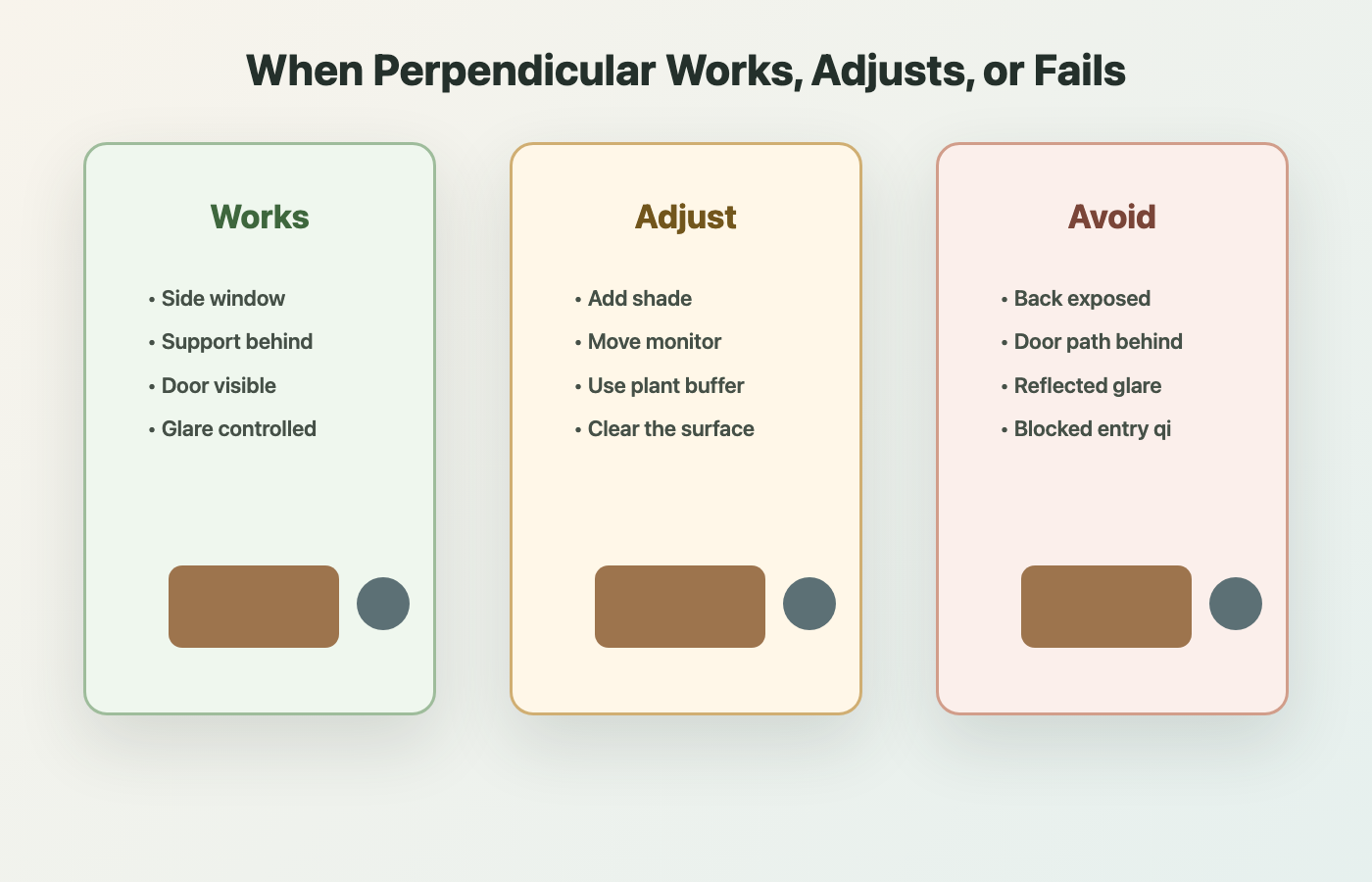
You do not always need to move the desk. Sometimes a small adjustment is enough.
| Problem | Better first adjustment | Why it helps |
|---|---|---|
| Screen glare | Add a shade, curtain, or side-angle monitor | Reduces eye strain and restless visual qi |
| Window behind chair | Add a low cabinet, plant, or solid screen behind you | Creates a stronger support feeling |
| Door behind chair | Rotate the desk or chair until the door is visible | Reduces startle and improves awareness |
| Narrow entry path | Pull the desk away from the doorway | Keeps receiving qi open |
| Too much window distraction | Keep the view at the side, not directly ahead | Lets light support work without taking over |
Small rooms often need compromise. A side window plus a clear door line is usually a good compromise. A perfect compass direction with glare, clutter, and weak backing is not.
When Perpendicular Is Better Than Facing the Window
Facing a window can feel inspiring for a few minutes and distracting for a full workday. Bright light, moving traffic, people outside, or a strong view can pull attention away from the desk. It can also create screen glare.
Perpendicular placement often solves three problems at once:
- You keep natural light.
- You avoid staring directly out.
- You can still orient toward the room.
That makes it especially useful for creative work, study, writing, client calls, and small apartments where the desk has to share a bedroom or living room.
Still, do not force the arrangement. If the window side is cramped, noisy, cold, or too bright, a different wall may be better.
What to Avoid
Avoid turning Feng Shui desk placement into fear. A less-than-perfect desk angle does not ruin your career, focus, or luck. It only gives you clues about how the room is affecting your attention.
These setups are usually weaker:
- your back is directly to a window or busy doorway
- the desk blocks the main entry path
- the monitor catches direct window glare
- the chair sits in a narrow traffic lane
- the desk is technically "lucky" but feels uncomfortable
The Qi energy page gives the wider principle: smooth movement matters. Your home office should feel easy to enter, easy to sit in, and easy to use.
A Practical Setup Checklist
Use this order before buying anything:
- Put the desk side-on to the window if the room allows it.
- Sit down and check whether you can see the door or main movement path.
- Check your back support. Add a shelf, cabinet, curtain, or screen only if it genuinely improves the feeling.
- Test glare at the time of day you actually work.
- Clear the desk surface and nearby floor path.
- Add one healthy plant, lamp, or calm object only after the layout works.
If you want a more complete reading, FateFolio's home Feng Shui map flow can review the broader room and home context. It is especially useful when a desk problem is connected to a door, window, hallway, room shape, or surrounding building pattern rather than the desk alone.
Review your room before moving the desk again
Use FateFolio's home Feng Shui map reading to compare layout, qi flow, windows, doors, room function, and practical adjustment options.
FAQ
Is it good Feng Shui to put a desk perpendicular to a window?
Yes, it can be good when the window is at your side, your back has support, the door path is visible, and glare is controlled.
Should my desk face the window or be side-on?
Side-on is often better for daily work because it keeps natural light without making the window the main focus. Facing the window can be distracting or create glare.
What if my back is to the window?
Try rotating the desk or adding a stable backing element such as a curtain, shelf, or low cabinet. The point is to reduce the exposed feeling, not to add objects for superstition.
What direction should my desk face in Feng Shui?
Direction matters less than support, door awareness, light quality, and room flow. Start with the usable layout before fine-tuning compass ideas.
Can a small home office still have good Feng Shui?
Yes. In small rooms, good Feng Shui often means a clear path, side light, stable chair position, low clutter, and a desk surface that supports focused work.

About the editor
FateFolio Editorial
FateFolio Editorial
FateFolio Editorial writes plain-language notes on Bazi, I Ching, Feng Shui, readings, and timing—with the reasoning and limits kept in view.
Related posts
Feng Shui And Bathrooms Practical Guide
Learn Feng Shui bathroom rules, placement checks, drain and door concerns, and when a home Feng Shui reading adds context.
Feng Shui Declutter Guide for Home Energy
Use a Feng Shui declutter checklist to clear stagnant corners, reset entry flow, and decide when a full home map reading would help.
Mirror in Front of Window Feng Shui Guide
Learn when a mirror in front of a window works in Feng Shui, what to check first, and how to balance light, reflection, and qi.