Mirror in Front of Window Feng Shui Guide
Learn when a mirror in front of a window works in Feng Shui, what to check first, and how to balance light, reflection, and qi.
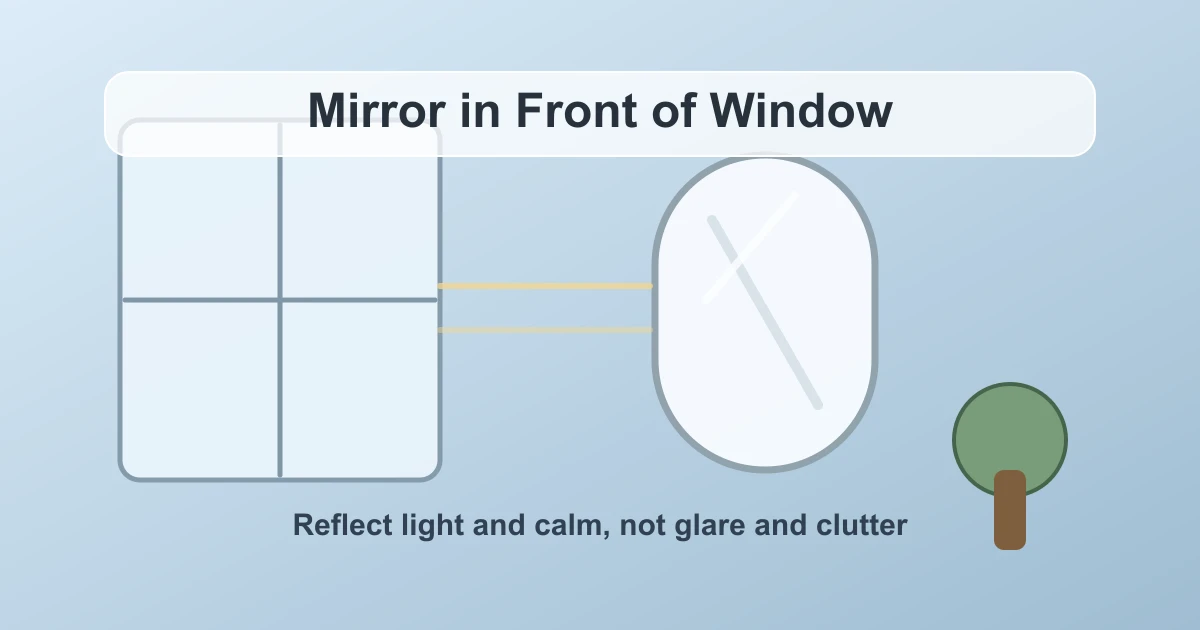
A mirror in front of a window is not automatically bad Feng Shui. The real question is what the mirror reflects, how the window light behaves, and whether the room feels brighter, calmer, and easier to use after the mirror is there.
Sometimes a mirror near a window adds light and spaciousness. Sometimes it doubles glare, reflects clutter, or makes the room feel visually restless. Start with the actual room experience before treating the placement as lucky or unlucky.
Quick Answer For A Window Mirror
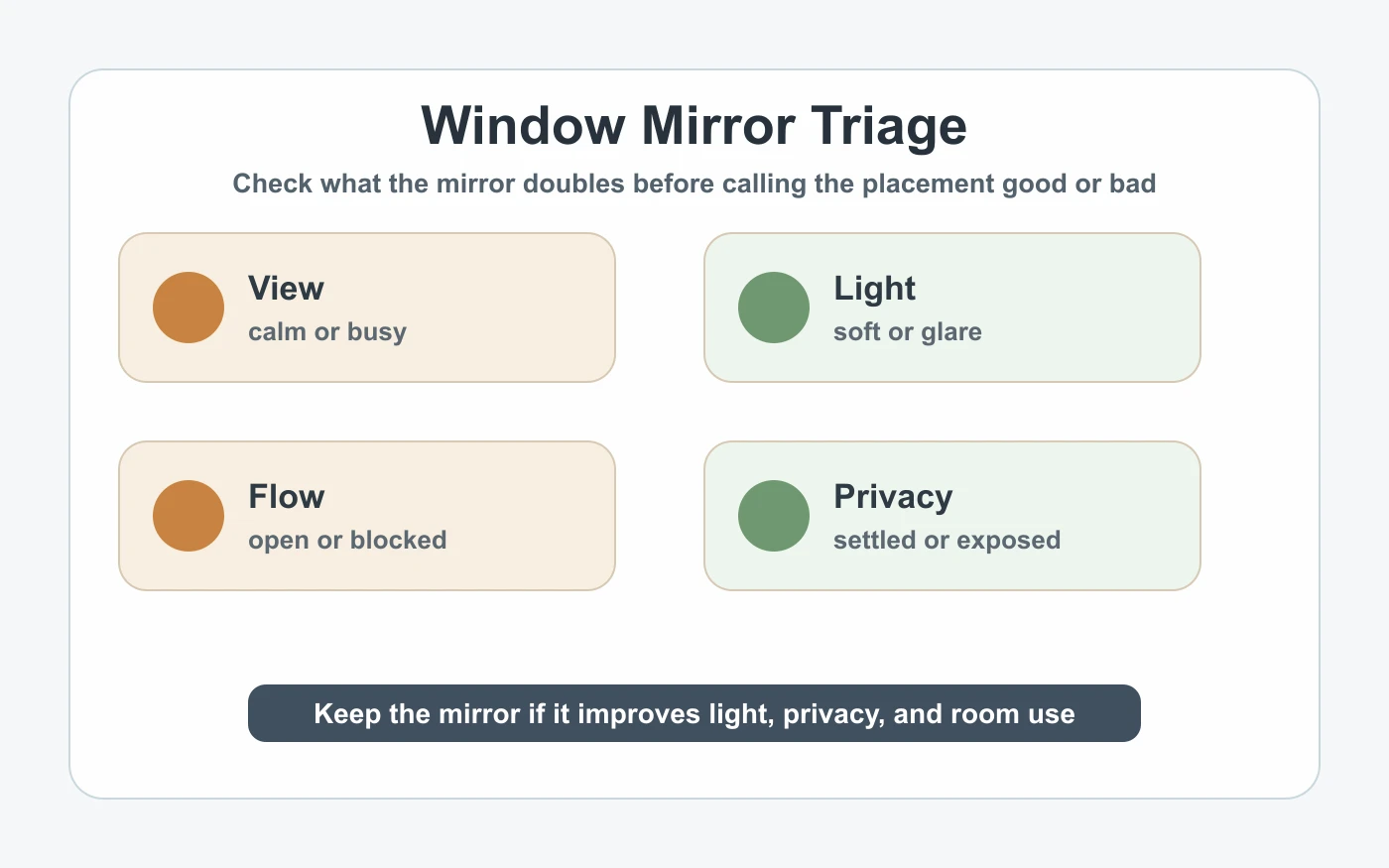
A mirror can go in front of a window when it reflects a calm view, soft light, a plant, or a useful part of the room. It is weaker when it reflects harsh glare, traffic, clutter, a sharp exterior form, or a view that makes the room feel exposed.
| Mirror condition | What it may create | Better first adjustment |
|---|---|---|
| Reflects open sky, greenery, or soft light | Brighter, more spacious room feeling | Keep it if glare and privacy are controlled |
| Reflects clutter, wires, traffic, or a harsh exterior view | Doubles visual noise and distraction | Change the angle or clean what is reflected |
| Sits directly in the strongest sun path | Glare, heat, and restless light movement | Add shade, move the mirror, or use a smaller mirror |
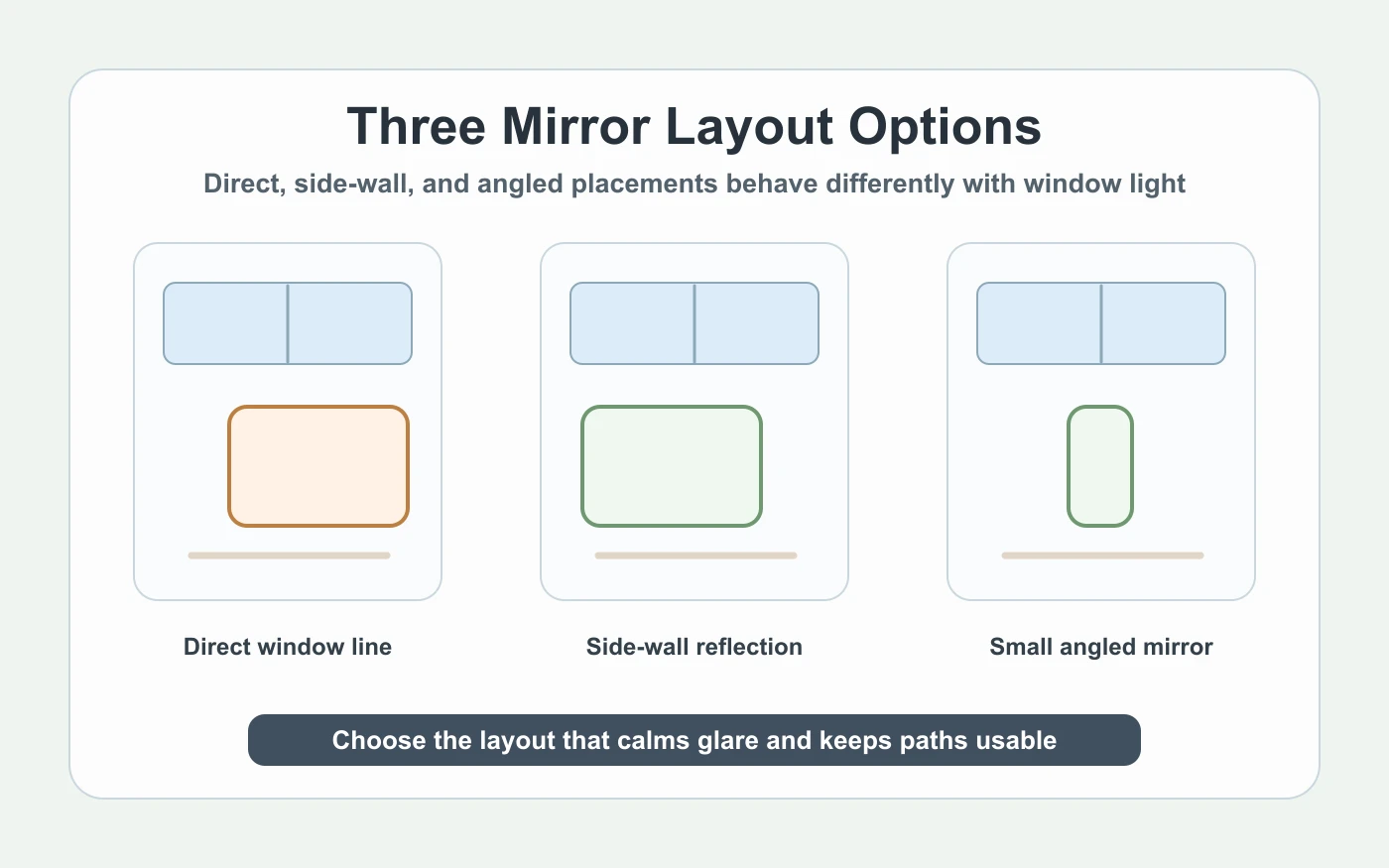
| Blocks the window function | Harder ventilation, curtains, or privacy control | Use a side wall, hanging arm, or narrower mirror |
| Reflects a door or busy path at the same time | Too much movement in one visual line | Separate the mirror from the main movement path |
The Feng Shui wiki gives the larger principle: placement is about relationship, not one object in isolation. Window, mirror, door, light, privacy, and movement all matter together.
What To Check Before You Move It
Stand where you normally enter and use the room. Then look at the mirror as if you were seeing the room for the first time.
- What is the first thing the mirror doubles?
- Does the reflection make the room feel open or busy?
- Does sunlight hit the mirror directly at the time of day you use the room?
- Can curtains, blinds, or ventilation still work?
- Does the mirror reflect a calm view, or does it pull attention outside?
The Qi Energy wiki is helpful here because qi is easier to understand as movement, attention, and environmental feeling. A mirror that makes light gentle and paths clear can support the room. A mirror that makes the eye bounce around usually needs adjustment.
When A Window Mirror Works Well
A window mirror works best when it supports the room's purpose. In a living room, it may bring more daylight into a darker wall. In a hallway, it may make a narrow passage feel less compressed. In a bathroom, a mirror in front of a window may be practical when the window is the only bright place above the vanity.
Good signs include:
- the reflected view is calm, clean, and stable
- glare is controlled with shade, distance, or angle
- the mirror does not block privacy or airflow
- the room's walking path remains clear
- the mirror helps a real task, such as grooming, entry checks, or light balance
Do not force a mirror placement just because it looks impressive in a photo. Feng Shui starts with lived use. If the mirror is beautiful but annoying every morning, the placement is asking for adjustment.
When It Is Better To Change The Placement
Move or soften the mirror when it makes the room feel sharp, exposed, or visually noisy. A mirror can double a problem as easily as it doubles light.
| Problem | Why it matters | Low-disruption fix |
|---|---|---|
| Direct sun hits the mirror | Creates glare and restless brightness | Add shade or angle the mirror away from the sun path |
| The mirror reflects street movement | Pulls outside activity into the room | Shift it to reflect a calmer interior point |
| The mirror blocks a curtain or blind | Weakens privacy and daily function | Use a smaller mirror or side-wall placement |
| The reflection shows clutter | Makes the room feel busier than it is | Clear the reflected zone first |
| The mirror faces a door and window line | Creates too much movement in one axis | Break the line with angle, furniture, or relocation |
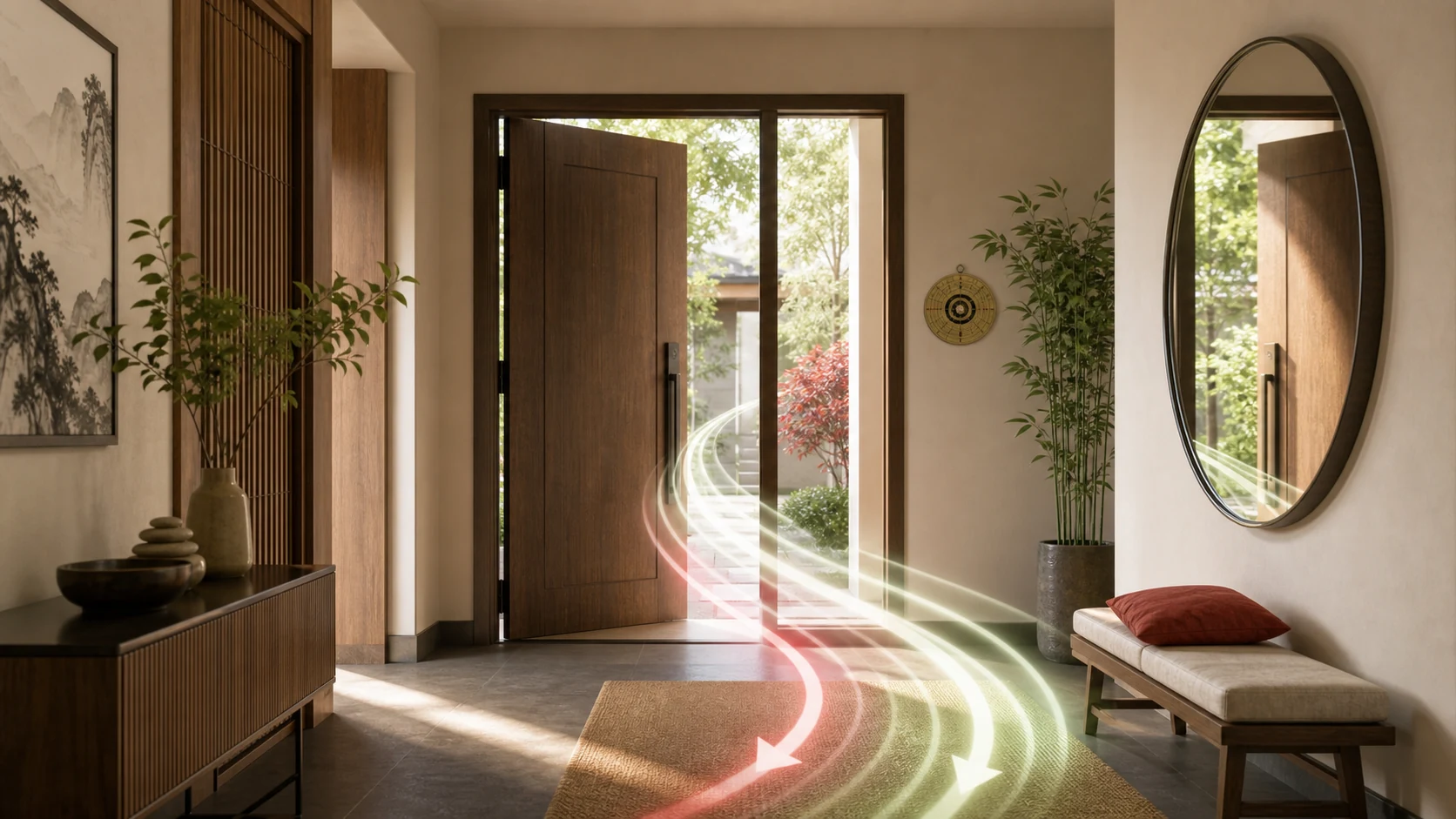
If the mirror is close to the main entrance, also read the Main Door wiki and the Feng Shui Mirror Facing Door Guide. A mirror-window question near the entry may really be a door-flow question.
Feng Shui Meaning Without Fear
Some mirror rules sound dramatic because mirrors are visually powerful. They catch light, double views, reverse images, and change how a room feels. That does not mean a window mirror ruins luck.
In practical Feng Shui, ask what the mirror is doing:
- Is it inviting useful light or scattering attention?
- Is it reflecting something beautiful or something stressful?
- Is it improving the room's function or making it harder to live with?
- Is it supporting privacy, calm, and flow?
- Is it solving a real layout problem or only following a trend?
This keeps the reading grounded. A mirror can be a helpful design tool when it supports receiving qi, light, and room function. It becomes weaker when it makes a home feel busier, brighter, or more exposed than the people living there want.
Where FateFolio Fits
FateFolio's home Feng Shui map reading is useful when the mirror question depends on the broader site. The home Feng Shui flow can consider room purpose, entry movement, exterior forms, visible roads or water, map context, uploaded photos, and the user's goal.
Use a broader reading when:
| Situation | Why a wider Feng Shui view helps |
|---|---|
| The mirror reflects a road, corner, pole, or busy exterior view | Exterior forms can change the meaning of the reflection |
| The window and main door line up | Entry flow may matter more than the mirror alone |
| The room feels bright but unsettled | Light, privacy, and qi movement need to be balanced |
| You are adjusting a small apartment | One object may affect several room functions at once |
| You want a calmer home office, bedroom, or entry | Room purpose changes the best placement |
FateFolio home Feng Shui
Review the mirror with the whole room
Use FateFolio home Feng Shui to compare window light, mirror reflection, entry flow, exterior forms, and practical room function.
Practical Takeaway
A mirror in front of a window is worth keeping when it reflects a calm view, soft light, and a useful part of the room. It is worth changing when it doubles glare, clutter, exposure, or busy movement.
Start with the reflection itself. Then check light, privacy, room flow, and daily use. The best Feng Shui adjustment is usually the smallest change that makes the room feel clearer and easier to live in.
FAQ
Is it bad Feng Shui to put a mirror in front of a window?
Not automatically. It depends on what the mirror reflects, whether glare is controlled, and whether the placement supports the room's function.
Can a mirror face a window if the view is good?
Yes, it can work when the view is calm and the mirror brings in soft light without glare or privacy problems.
What if the mirror reflects a busy street?
That is a weaker placement. Try changing the angle, adding curtains, or moving the mirror so it reflects a calmer part of the room.
Is a mirror in front of a bathroom window okay?
It can be okay when it solves a real layout problem and does not block ventilation, privacy, or daily use. Practical function matters as much as symbolism.

About the editor
FateFolio Editorial
FateFolio Editorial
FateFolio Editorial writes plain-language notes on Bazi, I Ching, Feng Shui, readings, and timing—with the reasoning and limits kept in view.
Related posts
Feng Shui Mirror Facing Door Guide
Learn when a mirror facing the door feels disruptive, what to check first, and how to adjust entrance flow without fear-based fixes.
Feng Shui Sofa Placement Guide
Learn where to place a sofa in Feng Shui, what to avoid, and how to balance wall support, entry view, traffic flow, and comfort.
Feng Shui Jade Plant Placement Guide
Learn Feng Shui jade plant placement, what to avoid, how it differs from Money Tree advice, and why real plant care comes first.