Feng Shui Mirror Facing Door Guide
Learn when a mirror facing the door feels disruptive, what to check first, and how to adjust entrance flow without fear-based fixes.
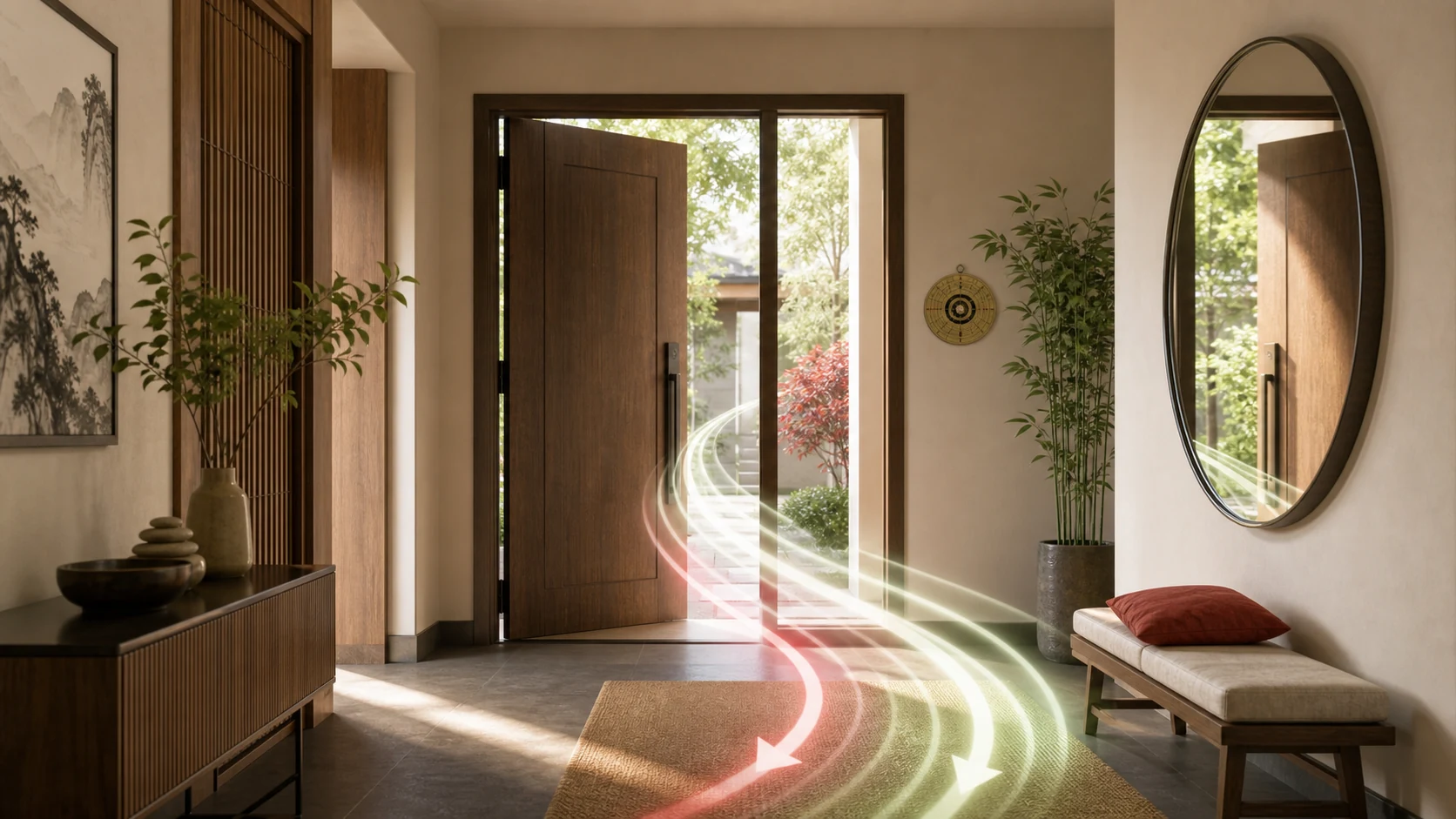
A feng shui mirror facing door is not automatically unlucky. The better question is whether the mirror reflects the main entrance in a way that makes the entry feel rushed, exposed, confusing, or visually scattered.
In practical Feng Shui, the main door is where a home first receives people, light, sound, and movement. A mirror can help a small entry feel brighter, but it can also bounce attention back toward the door if it sits directly opposite the entrance.
Why The Door Matters First
The Main Door Wiki explains why the entrance is treated as a primary qi point in Yang Feng Shui. It is the place where outside movement becomes inside movement, so visibility, lighting, clutter, and the first few steps all matter.
A mirror changes that first impression. If it is directly opposite the door, a person entering the home may see their reflection before they see the room. That can feel sharp or abrupt, especially in a narrow hall.
The key is not superstition. It is the combined effect of reflection, light, movement, and attention.
Quick Mirror Placement Triage
Use this table before moving the mirror. Many entries are fine once you separate the mirror from the direct door line.
| Mirror condition | What it may create | Better first adjustment |
|---|---|---|
| Directly opposite the main door | A fast bounce-back feeling at entry | Move it to a side wall or soften the reflection |
| Reflects clutter, shoes, or a dark corner | Doubles the visual noise | Clean the reflected area before changing the mirror |
| Reflects natural light from the side | Brightens the foyer without pushing back at the door | Keep it if the entry feels calm and useful |
| Faces a narrow hall | Can make the path feel busy | Use a smaller mirror or add grounding furniture |
| Reflects a plant, lamp, or art | Can make the entry feel welcoming | Keep the reflected object simple and maintained |
The Qi Energy Wiki and Receiving Qi Wiki are useful companion pages because they keep the focus on flow rather than fear.
What To Check Before You Move It
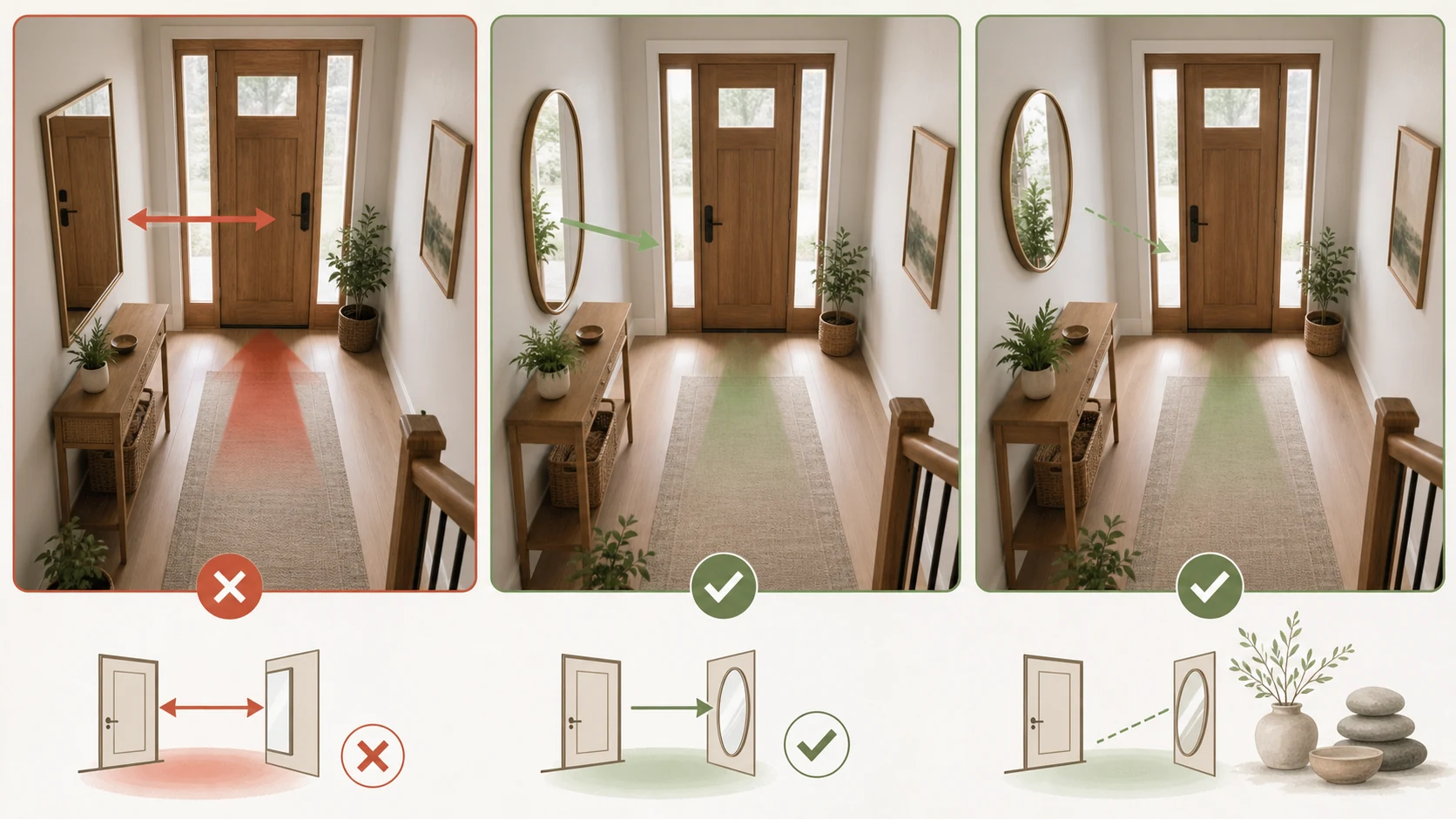
Stand outside the door, open it naturally, and walk in as you usually would. Notice what your eye meets first.
- Can you step in without seeing yourself immediately?
- Does the mirror reflect the door, a busy shoe area, or a calm part of the entry?
- Does the entry feel brighter, or does the reflection create glare?
- Does the mirror help with a practical task, such as checking appearance before leaving?
- Is the mirror large enough to dominate the foyer?
If the answer is mostly practical and calm, the mirror may be fine. If the entrance feels abrupt, noisy, or visually restless, adjust the mirror before adding symbolic cures.
Better Places For An Entry Mirror
A mirror near the front door usually works best when it supports the entrance without competing with it.
Good options include:
- A side wall where the mirror catches light but does not stare straight at the door.
- Above a narrow console, with a lamp, tray, or plant below it to ground the reflection.
- Near the entry but angled toward a calmer part of the home.
- Inside a closet door if the foyer is too tight for a visible mirror.
The Sitting And Facing Wiki is relevant when the front of the home and the daily entrance are not the same side. A mirror facing a rarely used formal door may matter less than a mirror that dominates the entrance everyone actually uses.
Simple Fixes That Do Not Feel Superstitious
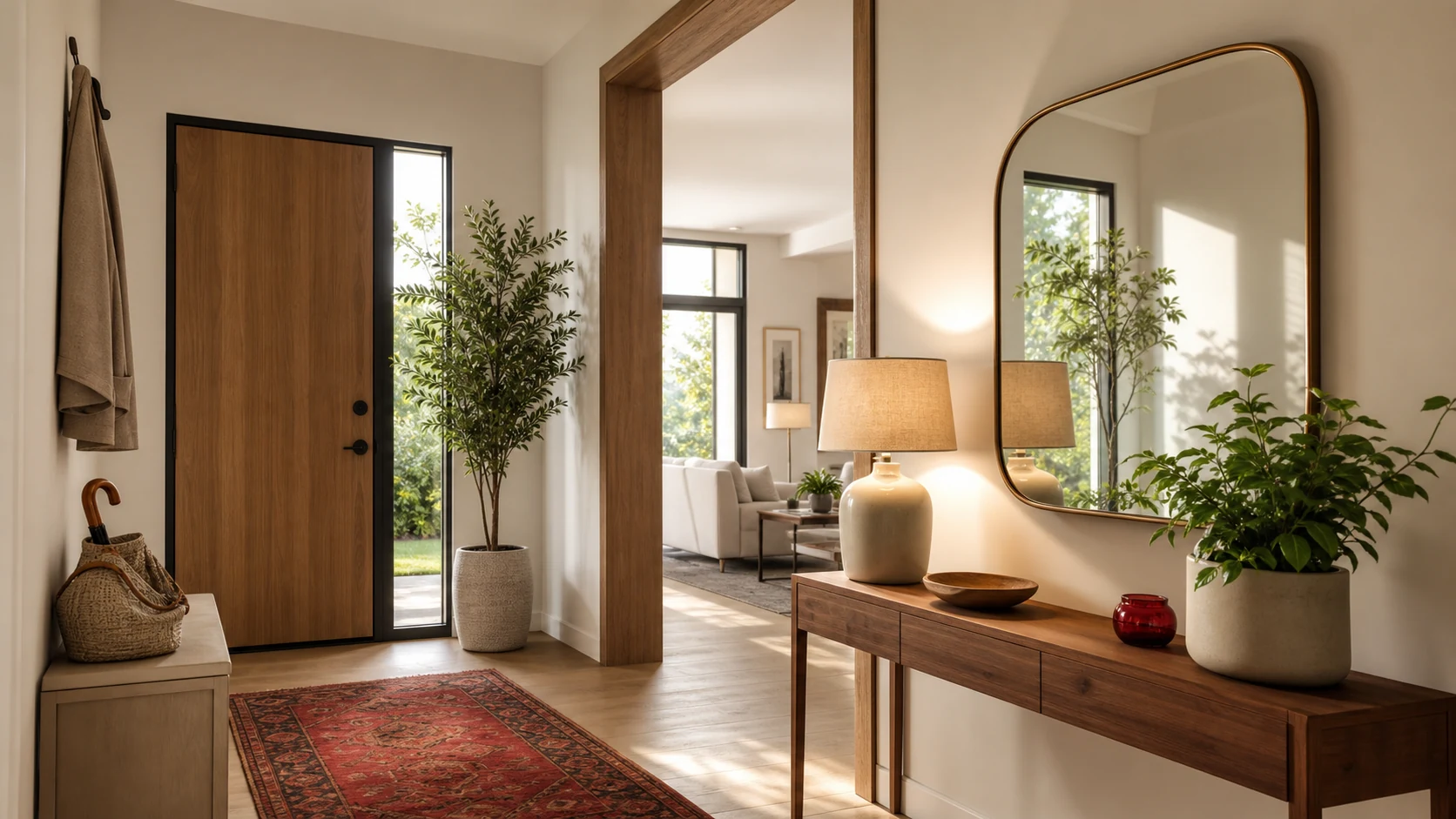
Try the lowest-disruption fix first:
- Clean what the mirror reflects.
- Add softer lighting so the mirror is not the brightest object in the entry.
- Shift the mirror a few inches off the exact door line.
- Use a plant, console, or art piece to give the entrance a calmer landing point.
- Replace an oversized mirror with a smaller one if the foyer feels visually busy.
If the mirror reflects an exterior road, a sharp corner, or a confusing approach, compare it with the Feng Shui Wiki and the South Facing House Feng Shui Guide for broader entry and exterior-form context.
Where FateFolio Fits
FateFolio's home Feng Shui map reading is useful when the mirror question depends on the actual site. You can provide home context, residence type, goals, and visual references so the reading can consider the door, nearby roads, entry path, light, and room flow together.
This matters because a mirror rule by itself is too thin. A useful reading asks:
| Question | Why it matters |
|---|---|
| Which door do people really use? | Daily movement matters more than a label on a floor plan |
| What does the mirror reflect? | Reflection quality changes the practical effect |
| Is the entry narrow or open? | Small foyers react differently from wide foyers |
| Are there exterior pressures? | Roads, corners, and blocked approaches change the entrance reading |
| What is the user's goal? | Wealth, calm, protection, and family flow can require different priorities |
Review your entry in context
Use FateFolio home Feng Shui to compare the main door, mirror placement, map surroundings, photos, residence type, and practical goals.
Practical Takeaway
A mirror facing the door is worth adjusting when it makes the entrance feel rushed, reflective, glaring, or cluttered. It is not worth fearing on its own.
Start with the entry experience: door clarity, reflected view, walking path, light, and clutter. Then choose the smallest change that makes the foyer feel calmer and easier to use.

About the editor
FateFolio Editorial
FateFolio Editorial
FateFolio Editorial writes plain-language notes on Bazi, I Ching, Feng Shui, readings, and timing—with the reasoning and limits kept in view.
Related posts
Mirror in Front of Window Feng Shui Guide
Learn when a mirror in front of a window works in Feng Shui, what to check first, and how to balance light, reflection, and qi.
Feng Shui Dragon Statue Placement Guide
Learn where a Feng Shui dragon statue fits, what it symbolizes, when to avoid it, and how FateFolio reads the full home context.
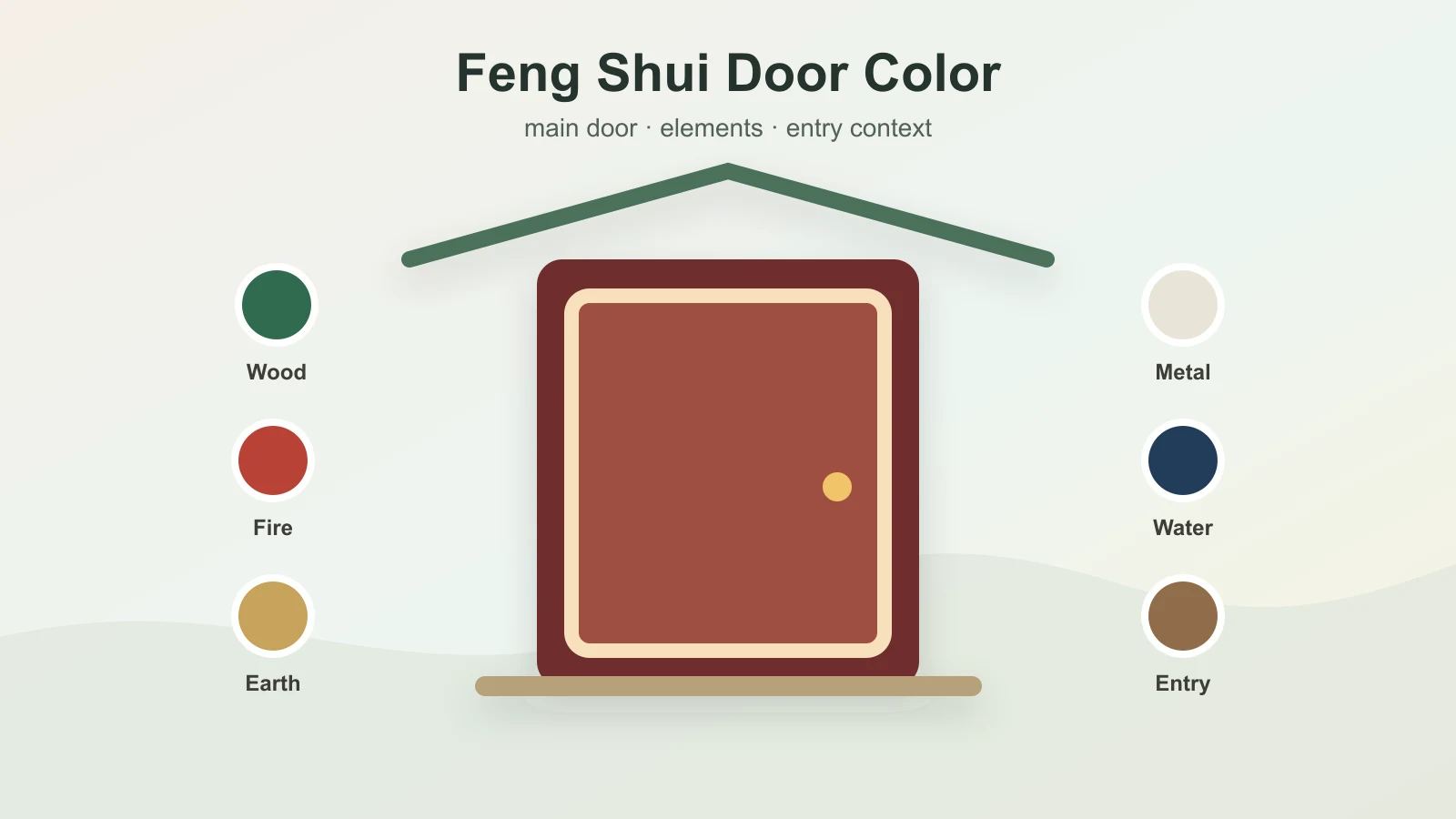
Feng Shui Door Color Guide for Front Entries
Choose a Feng Shui door color by facing direction, Five Elements, entry condition, and practical home context without fixed luck claims.