Feng Shui Door Color Guide for Front Entries
Choose a Feng Shui door color by facing direction, Five Elements, entry condition, and practical home context without fixed luck claims.
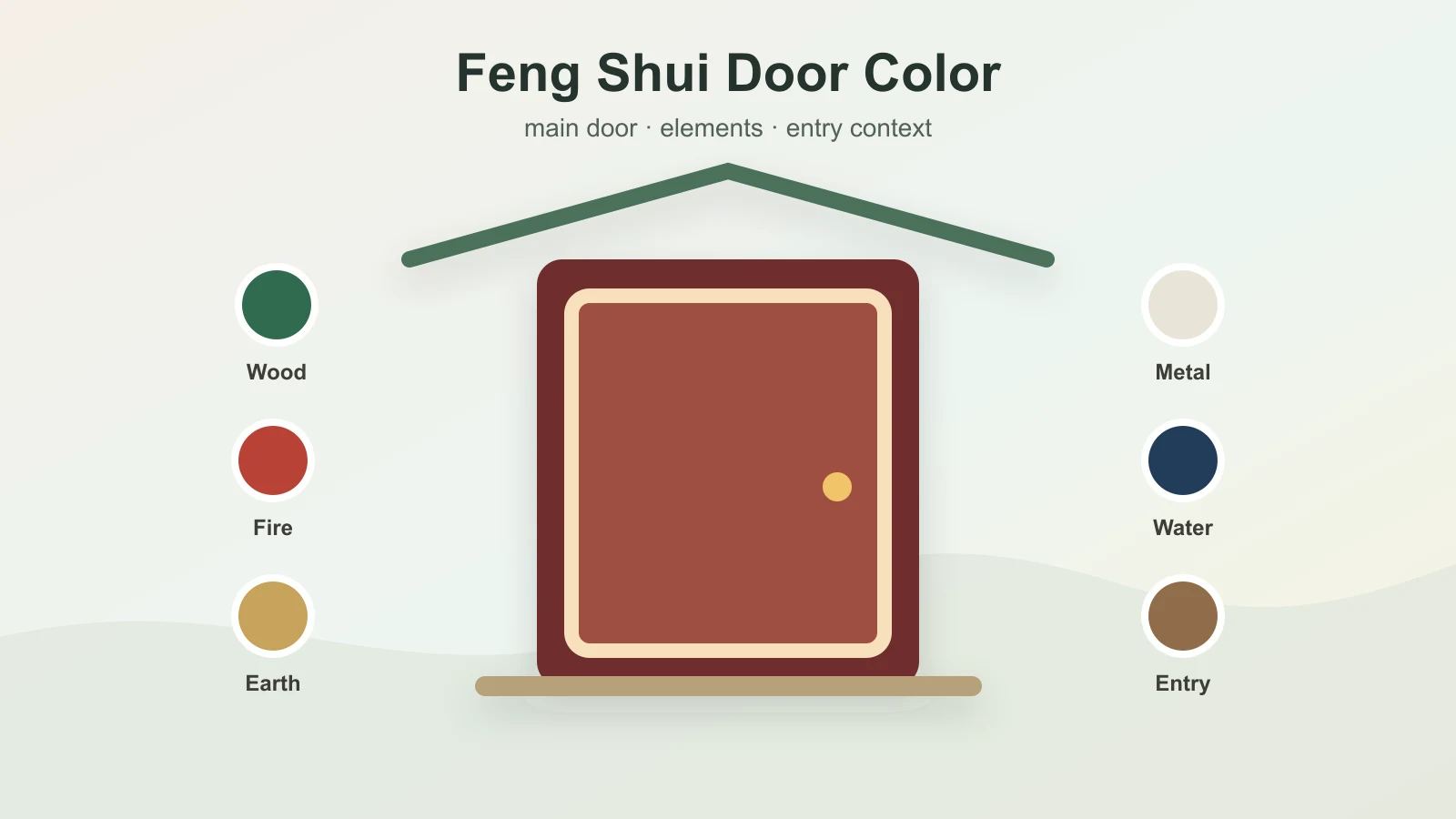
A feng shui door color works best when it supports the actual entrance people use every day. Color can help a front door feel clearer, warmer, calmer, or more visible, but it cannot fix a blocked path, broken hardware, harsh glare, or a confusing entry by itself.
In Feng Shui, the main door is treated as a primary qi point. That makes the door color worth considering, but the useful question is practical: does this color help the entrance receive people, light, movement, and attention in a balanced way?
Quick Answer For Feng Shui Door Color
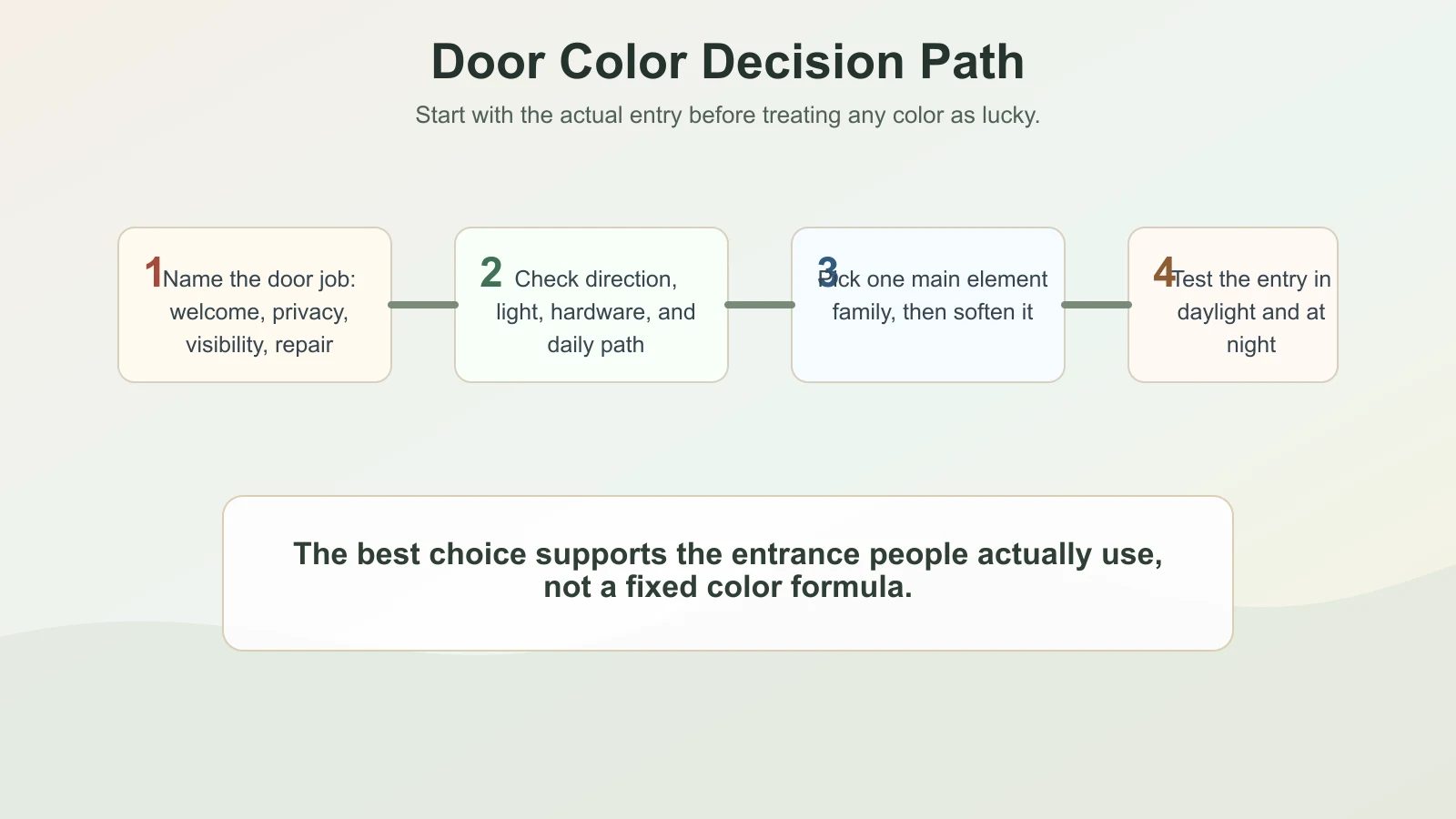
The best feng shui door color is the color that fits the door's facing direction, the home's visual condition, and the entry's real job. A red door may feel welcoming and active in one home, but too loud in another. A black or navy door may feel elegant and settled in one entry, but heavy if the entry is already dark.
Use this table as a first pass, then adjust for the actual home:
| Door color family | Element lens | Works better when | Use carefully when |
|---|---|---|---|
| Green, teal, botanical tones | Wood | The entry needs growth, freshness, or a softer welcome | The exterior already feels visually busy |
| Red, coral, warm orange | Fire | The door needs visibility, warmth, or a stronger presence | The entry is hot, exposed, tense, or already overstimulating |
| Yellow, ochre, terracotta, warm neutrals | Earth | The home needs steadiness, grounding, or a softer transition | The facade already feels heavy or flat |
| White, gray, pale metallics | Metal | The entrance needs clarity, order, or a cleaner outline | The home feels cold without texture, plants, or warm light |
| Black, navy, deep blue | Water | The entry needs depth, calm, or a more reflective tone | The entry is narrow, shaded, or visually heavy |
The table is not a fixed luck formula. It is a starting lens for choosing a color that helps the entrance do its job.
Start With The Main Door Job
The Main Door Wiki explains why the entrance matters in Yang Feng Shui: it is where outside movement becomes inside movement. Before choosing paint, stand outside the door and notice what the entrance is already saying.
Ask five questions:
- Is the door easy to find from the path, street, elevator, or hallway?
- Does the color help the door feel cared for, or does it hide damage?
- Is the entry too dark, too bright, too exposed, or too visually noisy?
- Does the surrounding wall, trim, plant, mat, or lighting compete with the door?
- Does the color fit the people who actually live with it?
A good feng shui door color should make the threshold feel more legible. If the door is hard to see, a clearer color may help. If the door already dominates the facade, a softer color may be better than more symbolic intensity.
Use Five Elements Without Getting Rigid
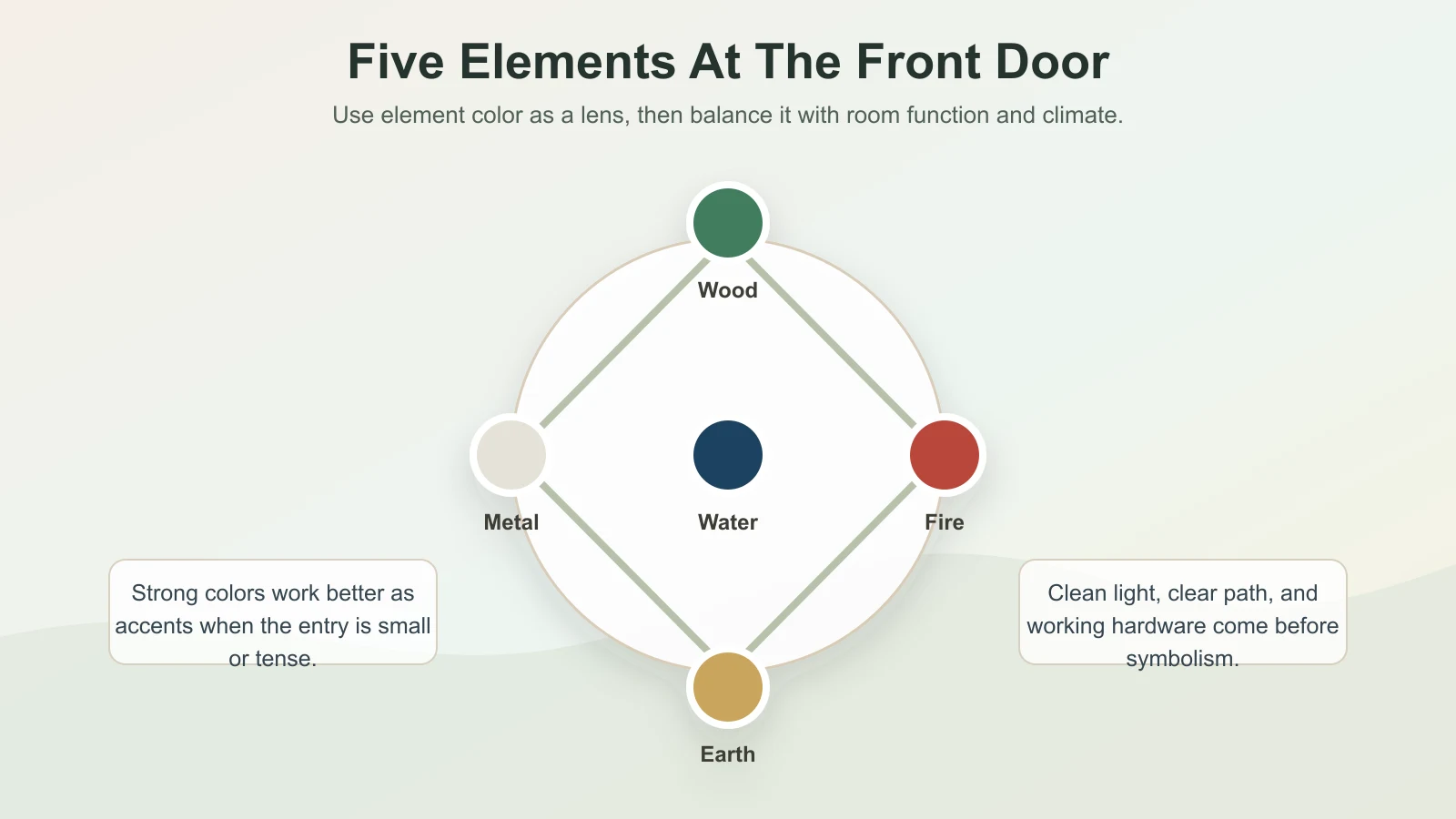
Feng Shui often reads color through the Five Elements in Feng Shui: Wood, Fire, Earth, Metal, and Water. This is useful because it gives color a vocabulary beyond taste. Green can feel renewing, red can feel active, Earth tones can feel steady, white can feel clean, and dark blue or black can feel deep.
The mistake is treating those associations as automatic. A Fire color does not guarantee recognition. A Water color does not guarantee career flow. A Wood color does not create growth if the entrance is cluttered and unused.
Use the element lens like this:
| If the entrance feels | Try first | Why it may help |
|---|---|---|
| Dull or hard to notice | Warmer Fire accent or clearer contrast | Gives the door more visual presence |
| Harsh or overexposed | Earth, muted Wood, or softer neutral | Reduces intensity and helps the entry settle |
| Cold or severe | Warm Earth, natural Wood, or better lighting | Adds welcome before adding symbolism |
| Scattered or cluttered | Metal clarity plus fewer objects | Helps the eye understand the threshold |
| Heavy or stagnant | Lighter trim, cleaner path, fresh plants | Improves movement before relying on a color cure |
If you already use a Bagua framework, treat Bagua Feng Shui as one more layer, not the only layer. The room, facade, climate, and daily entry path still matter.
Match Color To Direction Carefully
Many searches for feng shui door color are really asking about direction: south-facing doors, west-facing doors, north-facing doors, or doors that do not match a simple compass rule.
Direction can matter, but first verify what you are measuring. The Sitting And Facing concept explains why a building's active facing side is not always the same as the mailing-address front. The door people use every day may be more important than a formal door that stays closed.
Use direction as a prompt:
| Direction question | Better color question |
|---|---|
| My door faces south | Does the entry need more Fire visibility, or is it already too hot and bright? |
| My door faces north | Would darker Water colors feel calm, or would they make the entry too heavy? |
| My door faces east or southeast | Would Wood colors feel fresh, or would plants and lighting do the job better? |
| My door faces west or northwest | Would Metal clarity help, or does the entry need warmth and texture? |
| I am not sure which way it faces | Confirm the actual used entrance before choosing a symbolic color |
For a broader example of why direction needs context, compare the published South Facing House Feng Shui Guide. Direction is meaningful, but it is not enough by itself.
Check The Entry Before You Paint
Door color is one of the last adjustments, not the first. A beautiful color still feels weak if the entrance is blocked, dirty, broken, hidden, or stressful.
Before changing the color, check:
- Door hardware, hinges, locks, and weather stripping.
- Lighting at night, especially for safety and welcome.
- The mat, steps, mailbox, plants, shoes, and storage near the door.
- Whether the door opens fully and the first step inside feels clear.
- Whether the new color will still look good in rain, shade, sun, and seasonal light.
This is where Feng Shui overlaps with practical design. The Qi Energy page is useful because it keeps the focus on movement and experience, not only symbolism.
Where FateFolio Fits
FateFolio's home Feng Shui map reading is useful when door color is only one symptom of a larger entry question. You can review the residence type, map or home images, goals, surrounding forms, and the relationship between the main door, path, rooms, and visible approach.
That broader context matters when:
| Situation | Why a fuller reading helps |
|---|---|
| The door color feels wrong no matter what you try | The issue may be lighting, clutter, road pressure, or entry layout |
| The door faces a road, stair, elevator, or sharp corner | Exterior form may matter more than paint |
| The home has multiple entrances | Daily use may matter more than the formal front |
| You are choosing between strong colors | A room-by-room or exterior check can show which one is less disruptive |
| You want a symbolic choice without fear marketing | A reading can keep the decision practical and bounded |
FateFolio Feng Shui
Check your front door in home context
Use FateFolio to review door direction, visible approach, entry flow, home images, and practical Feng Shui patterns before treating color as a fixed cure.
Practical Takeaway
Choose a feng shui door color after you understand the entrance. Start with the main door's condition, the path people actually use, the amount of light, and the feeling of arrival. Then use direction and Five Elements as helpful language for color, not as a guarantee.
A useful color makes the door easier to notice, easier to approach, and easier to live with. If the entry still feels blocked after the color changes, the next answer is probably layout, lighting, cleaning, repair, or a broader Feng Shui review.
FAQ
What is the luckiest Feng Shui door color?
There is no universal luckiest color. The better color depends on the door's direction, the home's exterior, the entry's condition, and how the color changes the feeling of arrival.
Is a red front door always good Feng Shui?
No. Red can be strong and welcoming, but it may feel too intense on a hot, exposed, narrow, or visually loud entry. Use it as a thoughtful choice, not a fixed rule.
Should I choose a door color by compass direction?
Compass direction can help, but it should not override the actual door condition, light, climate, facade, and daily use. If direction is unclear, confirm the used entrance first.
Can FateFolio choose my exact door color?
FateFolio can help you read the door inside the full home context. Treat the output as reflective Feng Shui guidance, not as a guaranteed color prescription.

About the editor
FateFolio Editorial
FateFolio Editorial
FateFolio Editorial writes plain-language notes on Bazi, I Ching, Feng Shui, readings, and timing—with the reasoning and limits kept in view.
Related posts
Feng Shui Colors Guide for Rooms and Elements
Learn Feng Shui colors by Five Elements, room purpose, Bagua context, and practical ways to choose color without fixed luck claims.
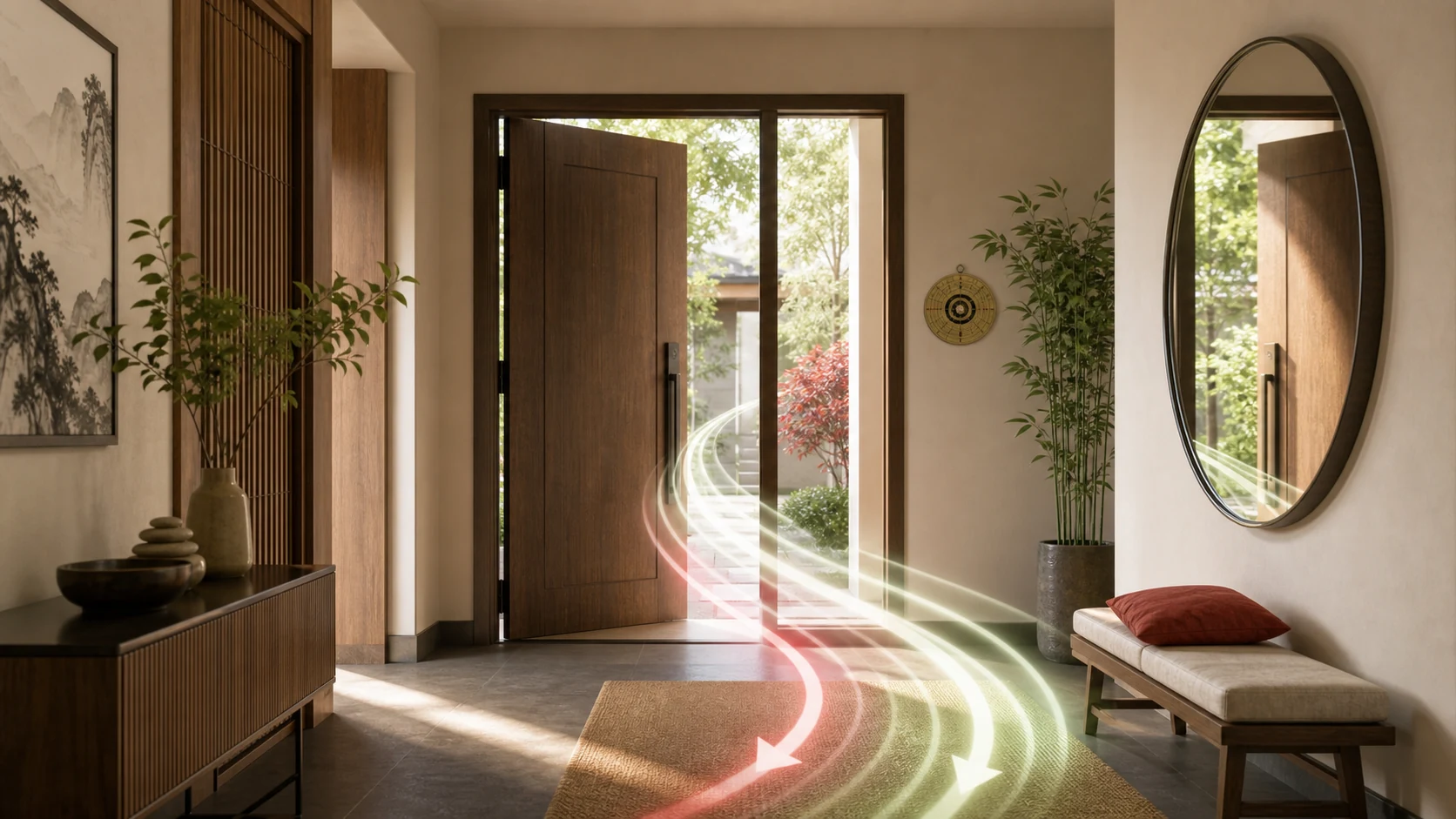
Feng Shui Mirror Facing Door Guide
Learn when a mirror facing the door feels disruptive, what to check first, and how to adjust entrance flow without fear-based fixes.
Feng Shui Dragon Statue Placement Guide
Learn where a Feng Shui dragon statue fits, what it symbolizes, when to avoid it, and how FateFolio reads the full home context.