Feng Shui Dragon Statue Placement Guide
Learn where a Feng Shui dragon statue fits, what it symbolizes, when to avoid it, and how FateFolio reads the full home context.
A feng shui dragon statue is usually used as a symbolic object for vitality, protection, confidence, and supportive movement. It can be meaningful when it fits the room, but it should not be treated as a guaranteed cure for money, career, relationships, or safety.
The better question is not "Where can I put a dragon for luck?" It is "Does this object support the way the entrance, room, or desk already works?" In Feng Shui, symbolic objects work best after the space is clean, usable, balanced, and comfortable.
Quick Placement Answer
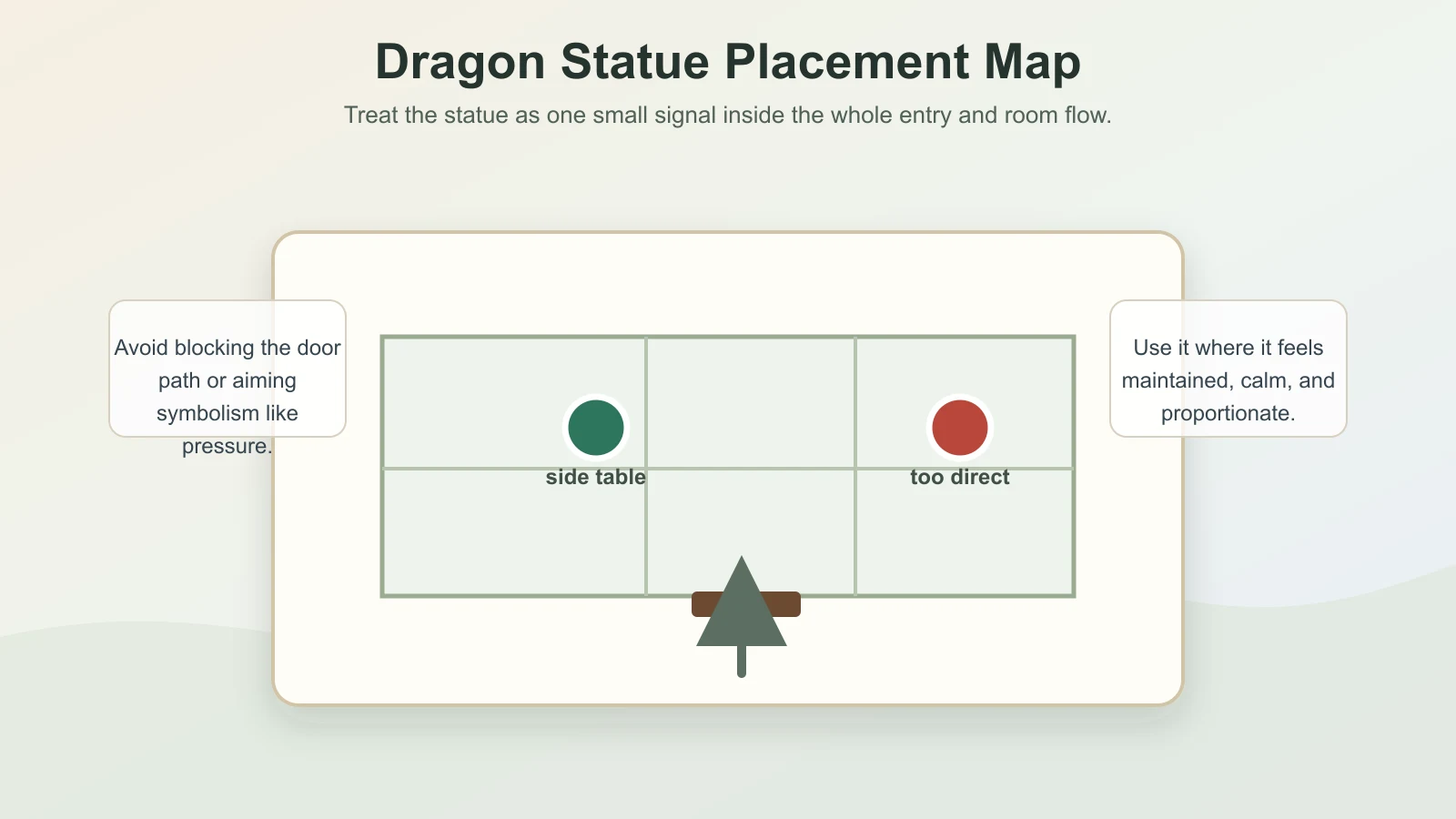
A feng shui dragon statue usually works better where it feels visible, respected, stable, and proportionate. It should not block a door path, point aggressively at a seat or bed, crowd a small entry, or become a fear-based object that makes the room feel tense.
Use this first-pass guide:
| Placement idea | Better use | Watch point |
|---|---|---|
| Entry side table or shelf | Adds a clear symbolic accent near arrival | Do not block the door, shoe area, or walking path |
| Living room display | Supports an active social room without dominating it | Keep the scale proportionate to furniture and light |
| Office or study shelf | Can act as a confidence or focus symbol | Avoid making the desk feel crowded or visually aggressive |
| Left side of a room or property view | Echoes the Azure Dragon support idea | Do not force this if the actual layout makes no sense |
| Bedroom | Usually not the first choice | The room may need softer, quieter signals for rest |
The statue is optional. If removing it makes the room calmer, that is useful information too.
Dragon Symbolism Is Not The Same As The Azure Dragon
The Azure Dragon is a specific Feng Shui concept from the Four Guardians model. It refers to the left-side support of a building when facing outward, not simply any dragon-shaped object.
A dragon statue can echo that symbolism, but it does not replace real form. A small figurine cannot fix a harsh road, blocked door, awkward floor plan, or unsupported side of a property. It can only add a symbolic layer after the physical conditions are understood.
Read the difference this way:
| Concept | What it means | What a statue can do |
|---|---|---|
| Azure Dragon | Left-side support, movement, and protective form | Remind you of that idea in a room |
| Main Door | Primary entry and qi mouth of the home | Add focus near an entry if it does not block flow |
| Dragon statue | Cultural symbol of vitality and confident movement | Serve as decor with meaning, not a cure by itself |
| Home Feng Shui | Whole-space reading of layout, direction, form, and use | Decide whether the object helps or distracts |
This distinction protects the article from turning a symbolic object into a shortcut.
Where A Dragon Statue Can Help
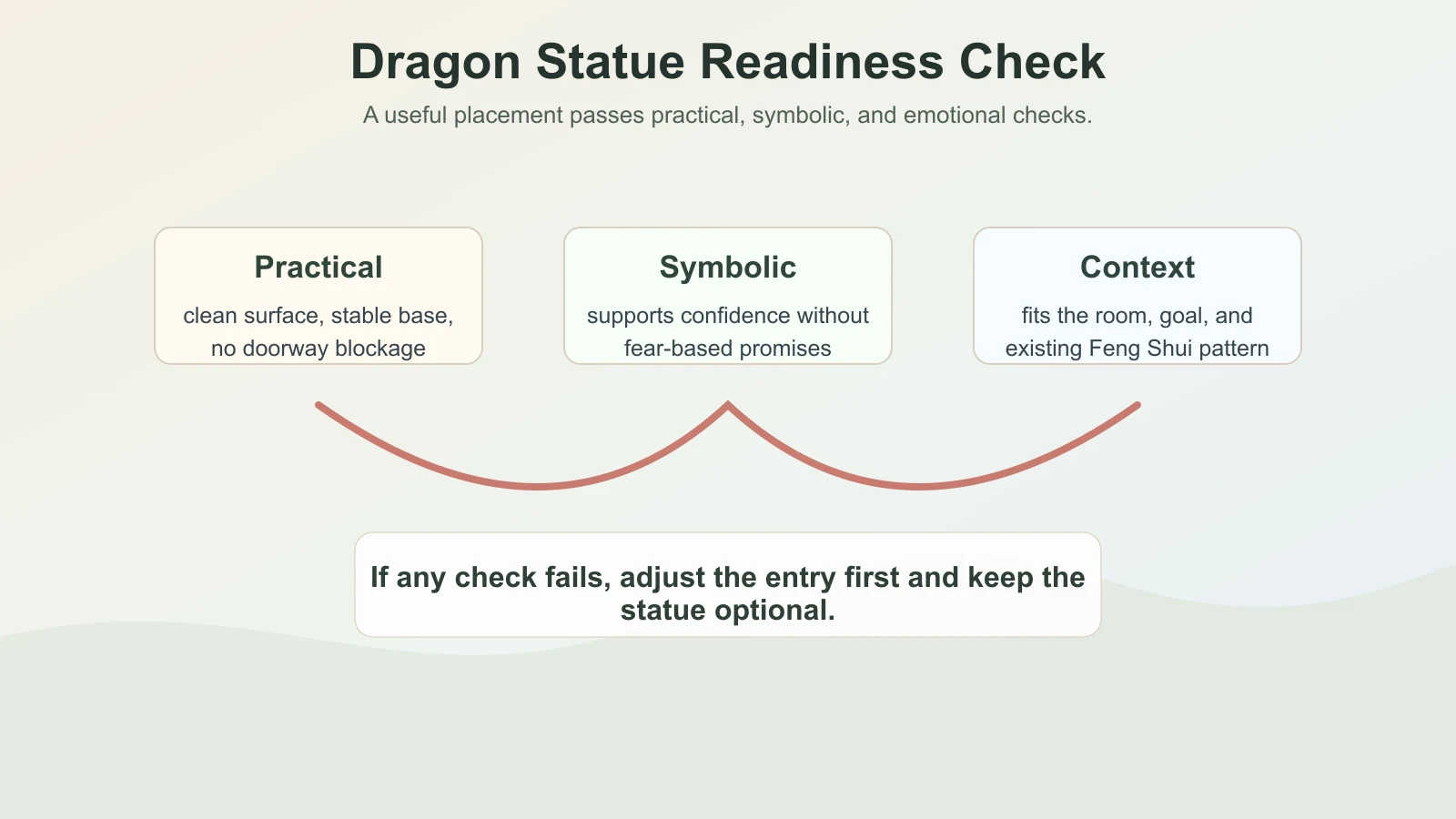
A dragon statue is most useful when it supports an already functional space. If the entry is bright, clean, and easy to use, a small dragon on a side table may add a sense of presence. If a study feels orderly and the statue feels inspiring, it may work as a focus object.
Look for three signs:
- The statue is clean, stable, and not visually neglected.
- It has enough space around it to feel intentional.
- The nearby room already supports its purpose: arrival, work, conversation, or display.
The Main Door page is useful if you are placing the statue near an entry. The door itself still matters more than the object. A repaired hinge, clear mat, better lighting, and open path usually improve the entry more than a symbolic cure.
When To Avoid Or Move It
A dragon statue can be too strong for the room, especially when the room is small, quiet, or already visually tense. In that case, moving it is not disrespectful. It is part of reading the space honestly.
Consider moving or removing it when:
- It sits directly in the walking path or blocks the door swing.
- It points at a bed, dining seat, or desk in a way that feels sharp.
- It collects dust, clutter, or broken objects around it.
- It makes a bedroom feel too active or watchful.
- It becomes a fear object that you feel afraid to adjust.
- You are using it to avoid practical repairs, cleaning, or layout changes.
The Sha Qi concept is relevant when an object feels sharp, pressured, or visually aggressive. Still, do not overstate it. Sometimes the issue is simply scale, glare, clutter, or taste.
How To Choose A Safer Placement
Start with the room's purpose. A living room can hold more visual energy than a bedroom. An entry can hold a clear symbolic accent if the path remains open. A home office can use an inspiring object if it does not compete with focus.
Use this placement sequence:
| Step | Question | Better adjustment |
|---|---|---|
| 1 | Is the room already clean and usable? | Clear clutter before adding symbolism |
| 2 | Does the statue block movement? | Move it to a side surface or shelf |
| 3 | Does it feel too intense? | Choose a smaller piece or softer location |
| 4 | Is it near the main door? | Keep the door path open and well lit |
| 5 | Does it support the user's goal? | Match placement to work, welcome, or display instead of generic luck |
If the dragon statue is part of a larger Feng Shui question, pair it with basic entry and room checks. Qi Energy is a helpful supporting concept because it keeps attention on flow, not object worship.
Where FateFolio Fits
FateFolio's home Feng Shui map reading can help when the statue question depends on the actual site. A reader can provide home context, residence type, goals, and images so the result can consider door flow, room function, surrounding forms, and visible layout.
That is especially useful when:
| Situation | Why context matters |
|---|---|
| You are placing it near the front door | Door movement and entry clarity matter first |
| You want career or confidence symbolism | The office layout and daily use may matter more than the statue |
| The room feels tense | The issue may be clutter, light, road pressure, or furniture position |
| You are comparing left-side placement | The real building facing and room orientation may change the answer |
| You feel anxious about moving it | A bounded reading can separate cultural respect from fear marketing |
FateFolio Feng Shui
Review the statue in home context
Use FateFolio to compare object placement with door flow, room purpose, visible surroundings, and practical Feng Shui patterns.
Practical Takeaway
A feng shui dragon statue can be a meaningful symbol, but it should support the space rather than dominate it. Place it where it feels cared for, stable, proportionate, and aligned with the room's purpose.
If the entry is blocked, the desk is crowded, or the bedroom feels restless, fix the practical condition before relying on the statue. The strongest Feng Shui adjustment is usually the one that makes the home easier to use and easier to settle into.
FAQ
Where should I put a Feng Shui dragon statue?
Start with a clean, stable, visible place that does not block movement. Entry-side tables, living room shelves, or office displays can work when the statue feels proportionate and intentional.
Is a dragon statue good for the bedroom?
Usually a bedroom needs quieter, softer signals. If the statue makes the room feel active, watchful, or tense, move it to a living room, entry, or study instead.
Does the dragon have to face the door?
Not always. A dragon facing the door can feel too direct in a small entry. The better test is whether the placement supports the room without blocking or pressuring the path.
Can a dragon statue fix bad Feng Shui?
No single object can fix a serious layout, safety, maintenance, or exterior-form issue. A statue can add symbolic meaning after practical conditions are handled.

About the editor
FateFolio Editorial
FateFolio Editorial
FateFolio Editorial writes plain-language notes on Bazi, I Ching, Feng Shui, readings, and timing—with the reasoning and limits kept in view.
Related posts
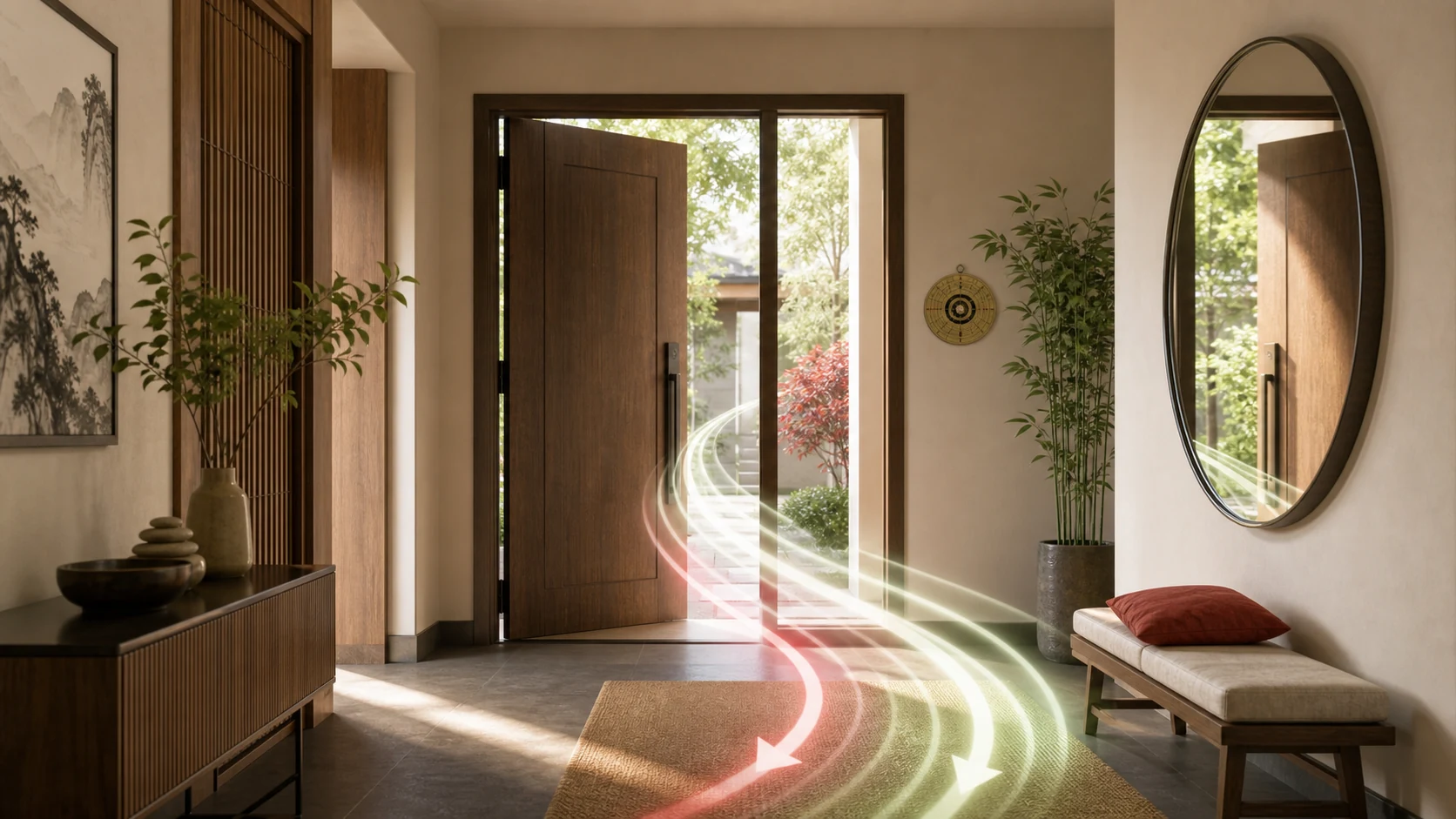
Feng Shui Mirror Facing Door Guide
Learn when a mirror facing the door feels disruptive, what to check first, and how to adjust entrance flow without fear-based fixes.
Feng Shui Door Color Guide for Front Entries
Choose a Feng Shui door color by facing direction, Five Elements, entry condition, and practical home context without fixed luck claims.
Feng Shui Jade Plant Placement Guide
Learn Feng Shui jade plant placement, what to avoid, how it differs from Money Tree advice, and why real plant care comes first.