Feng Shui Lighting Guide for Every Room
Use Feng Shui lighting to balance daylight, ambient, task, and bedroom light without glare, clutter, or one-size-fits-all luck claims.
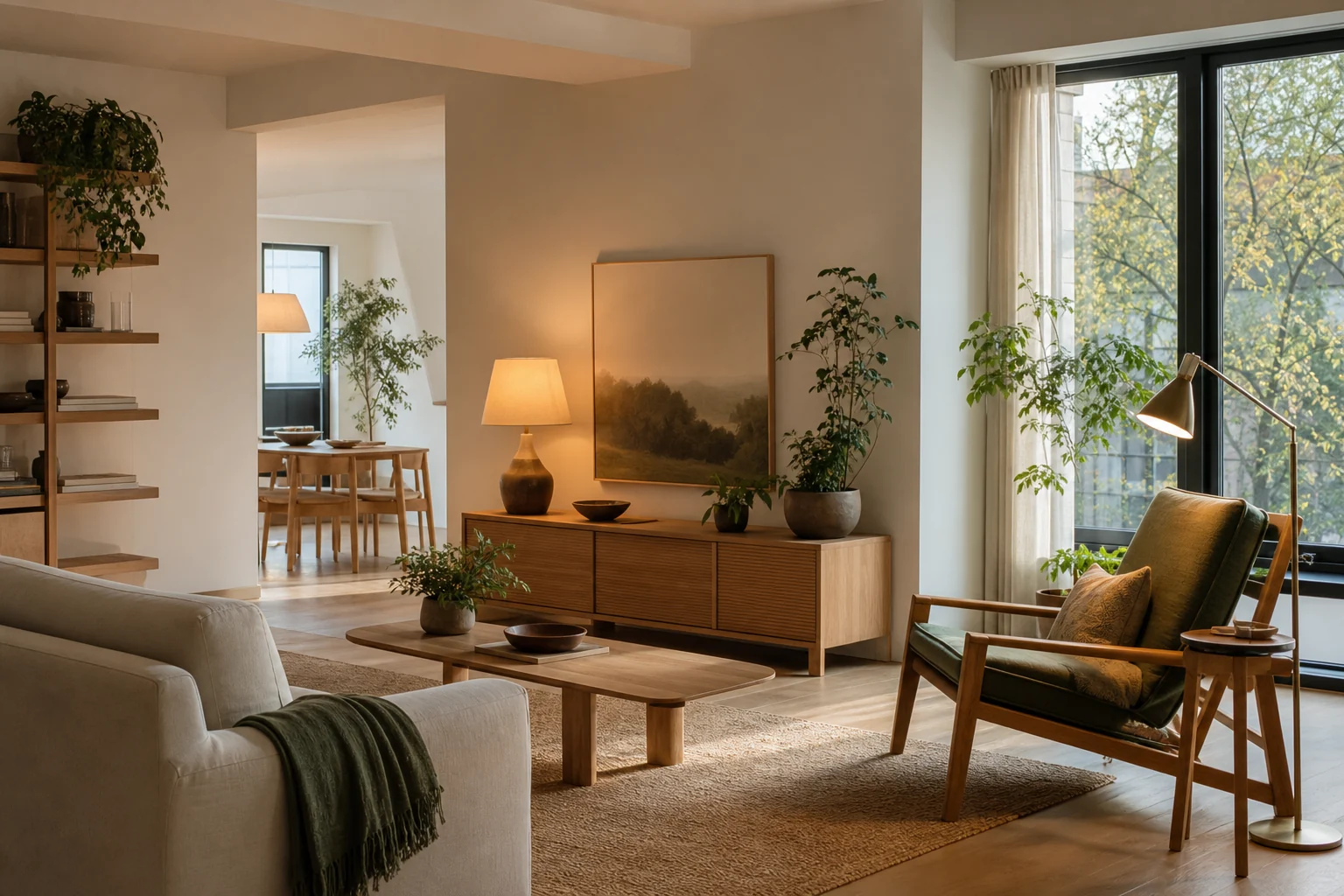
Feng Shui lighting works best when it makes a room easier to use at the right time of day. Start with daylight, add a comfortable ambient layer, place task light where focused work happens, and reduce glare or dark corners that make the room feel strained.
The goal is not to make every room equally bright. A kitchen needs clear working light, a living room benefits from flexible layers, and a bedroom usually needs a softer evening setting. In Feng Shui, balance responds to the function and experience of the space rather than one universal bulb, color, or direction.
Quick Feng Shui Lighting Answer
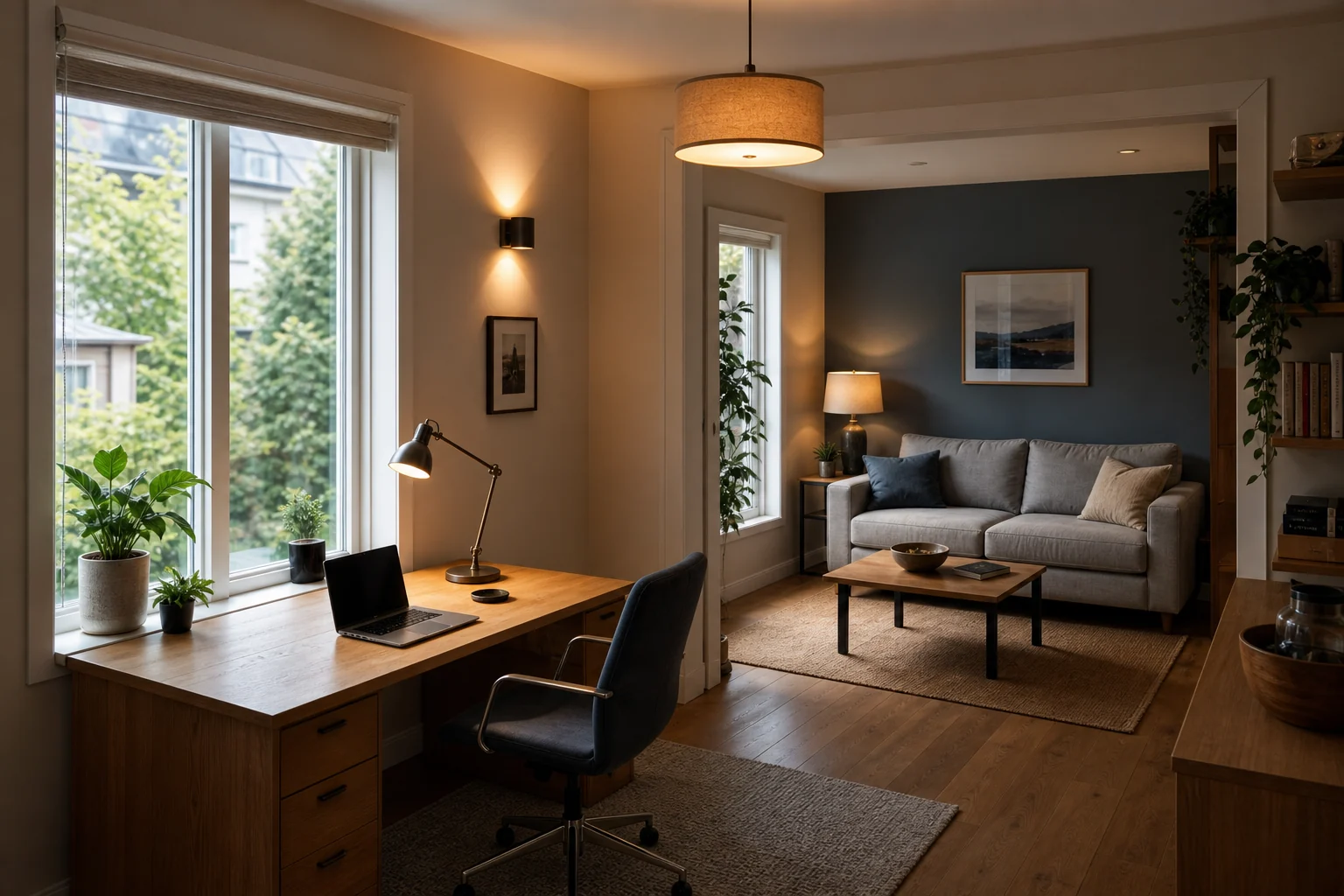
Use at least two useful light sources in rooms that serve more than one purpose. Let daylight carry the room when it is comfortable, use ambient light to prevent deep contrast, and add task light near reading, cooking, grooming, or desk work.
| Lighting layer | Main job | Better Feng Shui check | Common problem |
|---|---|---|---|
| Daylight | Establishes rhythm and reveals the room | Can curtains control glare and privacy? | Blinding windows or furniture fading in direct sun |
| Ambient light | Makes the whole room safely readable | Does it soften contrast without flattening the room? | One harsh ceiling fixture doing every job |
| Task light | Supports focused activity | Is light placed where eyes and hands need it? | Shadows across a desk, counter, or book |
| Accent light | Gives depth and highlights a useful focal point | Does it clarify the room rather than add clutter? | Too many glowing objects competing for attention |
| Night light | Supports safe low-level movement | Is it dim, shielded, and limited to the route? | Bright blue-white light disrupting the evening mood |
If a room already feels comfortable and works well, do not change every fixture to follow a symbolic rule. Feng Shui is more useful when it helps you notice the actual relationship between light, movement, attention, rest, and room purpose.
Build The Room In Four Lighting Layers
Begin with the light that already exists. Watch the room in the morning, afternoon, and evening before buying fixtures. A window that feels gentle at 9 a.m. may produce glare at 4 p.m.; a dim corner may disappear in summer and become obvious in winter.
Then build the artificial lighting in this order:
- Ambient layer: Choose a general light level that lets people move and recognize the room without eye strain.
- Task layer: Add a lamp or directional fixture for the activity that needs precision.
- Depth layer: Use one restrained wall, shelf, or floor light to prevent the room from feeling flat.
- Evening layer: Create a lower, warmer setting that does not require the brightest fixture.
The Qi Energy wiki describes qi through movement and relationship. Lighting can support that idea in a practical way: it shows the path through a room, helps important areas feel available, and prevents one bright hotspot from making the rest of the room disappear.
Do not confuse more light with better flow. A room can be overlit, visually noisy, or tiring. The useful test is whether the lighting guides attention without demanding it.
Match Light To Yin Yang And The Five Elements
The Yin Yang balance framework helps explain why different rooms need different lighting rhythms. Active, social, or detailed tasks lean toward a brighter and more yang setting. Rest, reflection, and winding down lean toward a softer and more yin setting. A good home can move between both instead of fixing every room at one intensity.
The Five Elements in Feng Shui can add a second layer of interpretation, but it should not replace lighting quality. Warm light is often associated with Fire, while the fixture's material, shape, and surrounding colors can suggest other elements. Treat these as design prompts, not rigid formulas.
| Room need | Useful lighting response | Elemental reflection without overclaiming |
|---|---|---|
| More activity | Clear task light and controlled contrast | A warm focal glow can suggest Fire and visibility |
| More steadiness | Even ambient light and a grounded fixture | Ceramic, stone, or square forms can suggest Earth |
| More clarity | Clean beam placement and less visual clutter | Metal fixtures can suggest precision and structure |
| More growth | Healthy daylight near plants and work areas | Wood materials can suggest development and continuity |
| More calm | Soft reflected light and gentle transitions | Darker tones or fluid shapes can suggest Water |
The elemental layer is optional. A safe, comfortable lamp that suits the activity is more important than choosing a material that matches a symbolic chart.
Choose Lighting Room By Room
Living room
A living room often needs the most flexibility. Combine daylight control, one comfortable ambient source, and a reading or conversation lamp. Avoid placing every bright fixture at the same height; varied height creates depth and lets the room shift between social and quiet use.
If a mirror is amplifying window glare or reflecting a bare bulb, the mirror in front of a window guide provides a more specific reflection check.
Kitchen and dining area
Light the work surface, not only the floor. A bright ceiling with dark counters still creates a poor task environment. Keep prep light clear and neutral enough to see ingredients, while dining light can be softer and lower if it does not shine directly into people's eyes.
Home office
Place task light to reduce hand and screen shadows. Use daylight from the side when possible, then control glare with a shade or curtain. A lamp behind the monitor can soften contrast, but it should not become a distracting glow.
Entry
The entry should reveal the lock, step, mat, storage, and walking path. The Main Door wiki explains why the entrance receives special attention in Feng Shui. Practically, a clear and welcoming entry usually starts with working fixtures, an open path, and enough light to arrive safely.
Bathroom
Use even face-level light for grooming and a separate low setting for quiet evening use if the room allows it. Avoid relying on one overhead beam that creates deep facial shadows or strong reflections on glossy surfaces.
Make Bedroom Lighting Support Rest
Bedroom lighting should help the room move from activity to rest. That usually means reducing direct glare, giving each side of the bed an accessible control when practical, and avoiding a single very bright fixture as the only option.
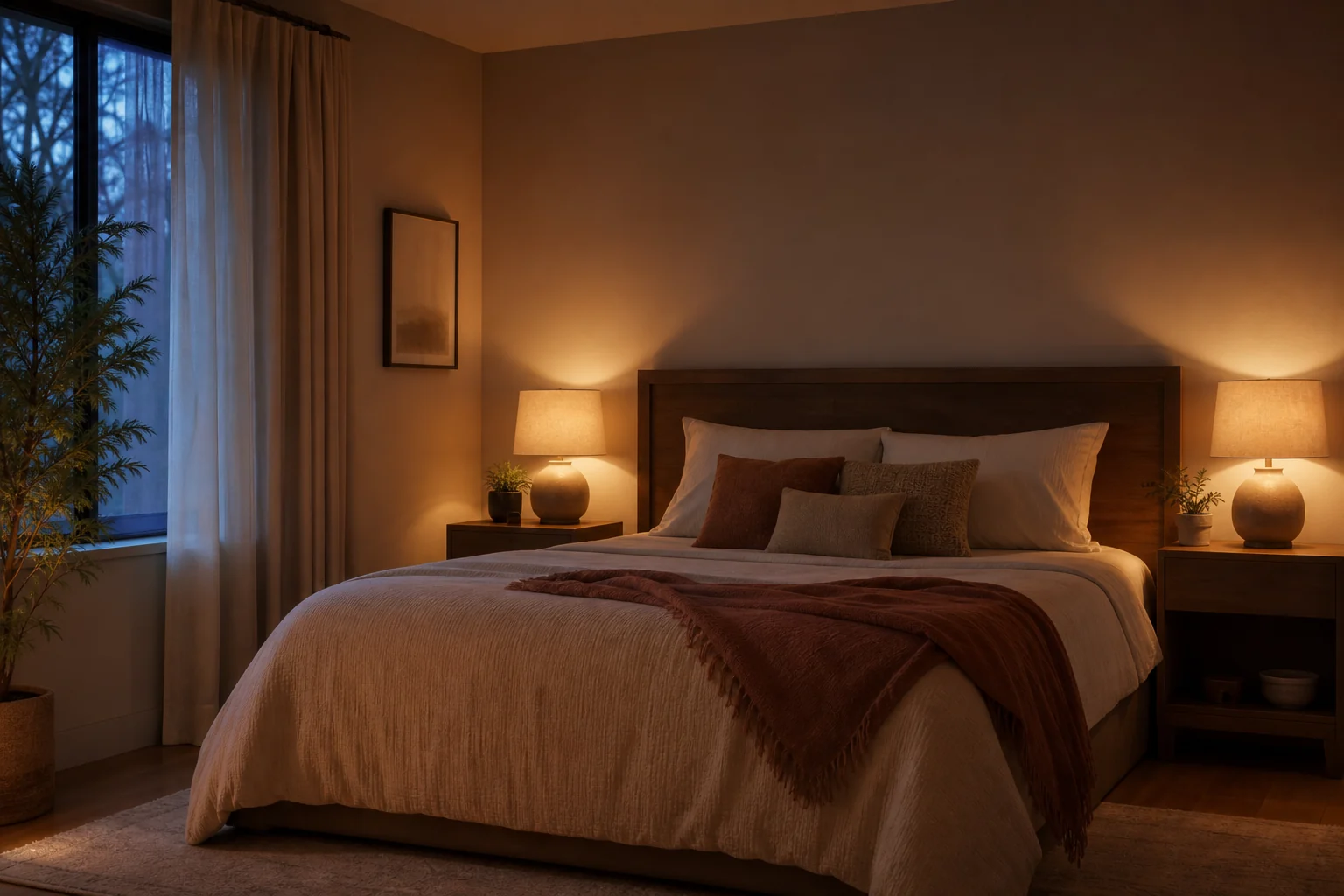
Use this bedroom checklist:
- Keep exposed bulbs out of the direct line of sight from the pillow.
- Use shades or diffusers that soften the beam.
- Place reading light where it reaches the page without lighting the entire room.
- Give the pathway to the door a safe low-level option.
- Reduce cool, intense light as the evening winds down if that feels more comfortable.
- Fix flicker, buzzing, unstable lamps, and awkward cords before adding symbolic remedies.
The published Feng Shui in Studio Apartment guide is useful when the bedroom and living room share one space. In a studio, lighting can create time-based zones without adding a physical divider: brighter task light during work, a contained social layer in the evening, and a lower bedside layer for rest.
Fix The Most Common Lighting Mistakes
Most lighting problems do not require a full redesign. Correct the clearest source of discomfort first, then observe the room again.
| Problem | What it can feel like | First adjustment |
|---|---|---|
| One harsh overhead fixture | Flat, exposed, tiring | Add a shaded floor or table lamp and dim the overhead light |
| Bright window glare | Restless, difficult to focus | Use adjustable curtains, blinds, or a changed screen/seat angle |
| Dark circulation path | Unclear or neglected | Add low, shielded light along the actual route |
| Too many small glowing objects | Visually noisy | Remove decorative lights until one focal layer remains |
| Mismatched color temperatures | Fragmented or accidental | Group fixtures by room function and time of use |
| Strong reflections | Distracting or pressuring | Re-aim the lamp or change the reflective surface relationship |
| Oversized fixture | Crowded or dominant | Choose a scale that leaves visual space around furniture |
Change one variable at a time. If you replace bulbs, move lamps, add mirrors, and repaint the room together, it becomes hard to learn which adjustment actually helped.
Where FateFolio Fits
FateFolio's Feng Shui reading accepts a room image, indoor or outdoor scene type, orientation, goals, and added context. That makes it a useful next step when the lighting question depends on furniture, windows, doors, room purpose, or a visible problem that generic advice cannot resolve.
It should still be used as reflective guidance. Electrical safety, fixture installation, wiring, and code compliance belong with qualified professionals.
FateFolio Feng Shui
Review lighting in the room that actually exists
Upload a room image and add its purpose, orientation, and goals so FateFolio can consider light together with layout and movement.
Practical Takeaway And FAQ
Good Feng Shui lighting is layered, adjustable, and matched to use. Begin with daylight, soften contrast with ambient light, add task light where work happens, and create a lower evening setting. Symbolic ideas can help you reflect on balance, but comfort, visibility, safety, and room function come first.
What type of lighting is best for Feng Shui?
There is no single best fixture. A balanced mix of daylight, ambient light, and task light usually works better than one bright ceiling source. The mix should change with the room's purpose.
Is warm light always better in Feng Shui?
No. Warm light can feel restful and welcoming, but kitchens, desks, and grooming areas may need clearer task light. Choose the light that supports the activity, then make the transitions comfortable.
How many lamps should a living room have?
Use enough sources to support the room's real activities without creating clutter. Many living rooms benefit from an ambient source plus one or two task or accent sources, but room size and layout matter more than a fixed number.
Can lighting fix bad Feng Shui?
Lighting can improve visibility, mood, focus, and how people move through a room. It cannot correct every layout, maintenance, safety, or exterior-form issue, and it does not guarantee life outcomes.

About the editor
FateFolio Editorial
FateFolio Editorial
FateFolio Editorial writes plain-language notes on Bazi, I Ching, Feng Shui, readings, and timing—with the reasoning and limits kept in view.
Related posts
Feng Shui Colors Guide for Rooms and Elements
Learn Feng Shui colors by Five Elements, room purpose, Bagua context, and practical ways to choose color without fixed luck claims.
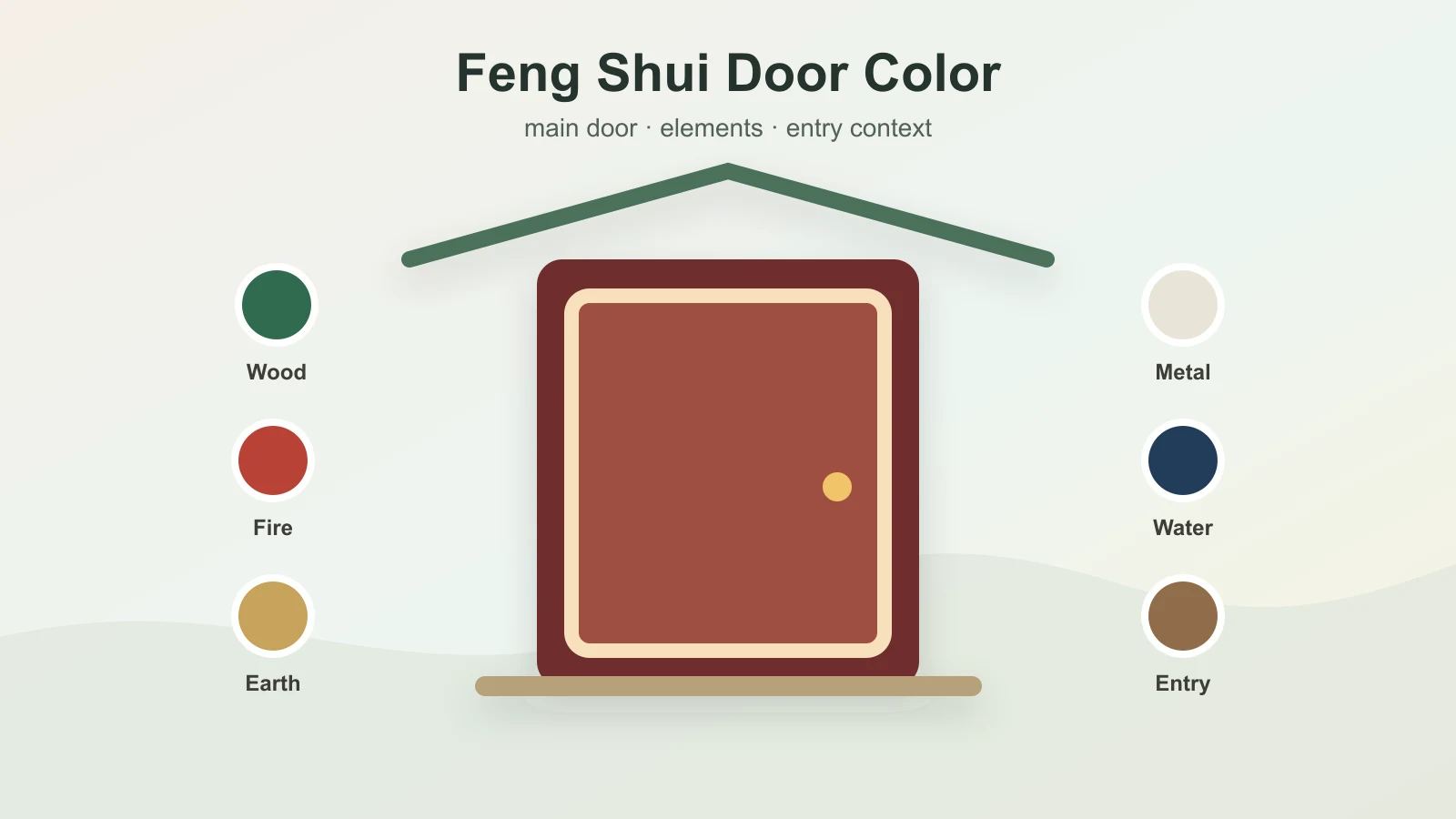
Feng Shui Door Color Guide for Front Entries
Choose a Feng Shui door color by facing direction, Five Elements, entry condition, and practical home context without fixed luck claims.
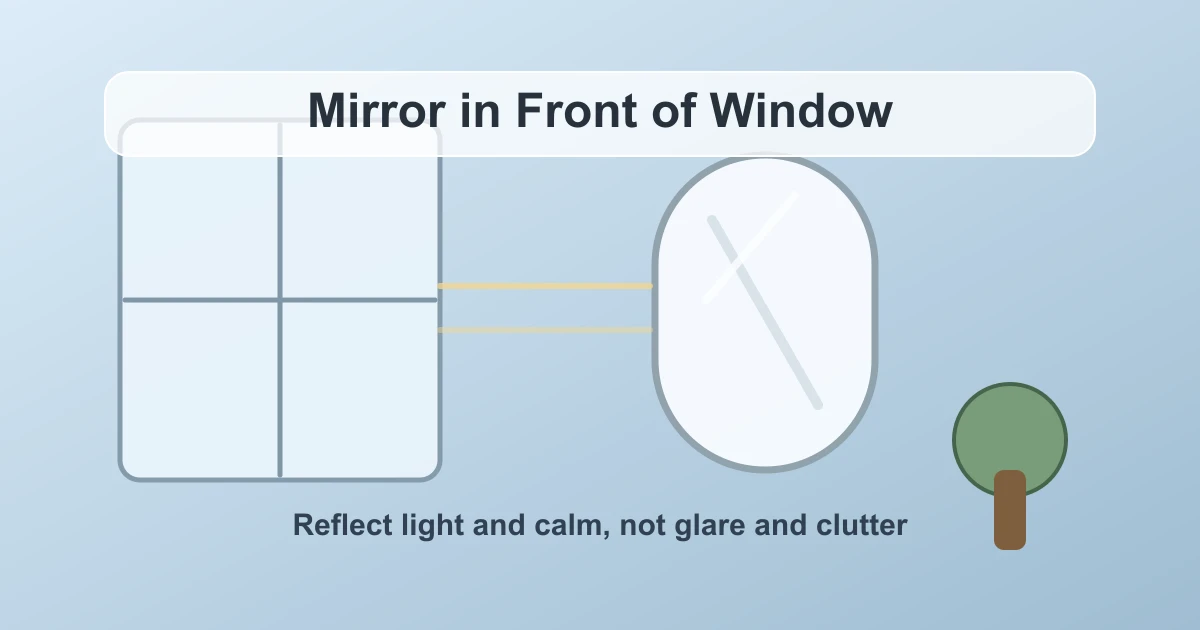
Mirror in Front of Window Feng Shui Guide
Learn when a mirror in front of a window works in Feng Shui, what to check first, and how to balance light, reflection, and qi.