Feng Shui in Studio Apartment Guide
Learn how to zone a studio apartment with bed placement, entry flow, light, plants, and calm work/sleep boundaries before a home Feng Shui reading.
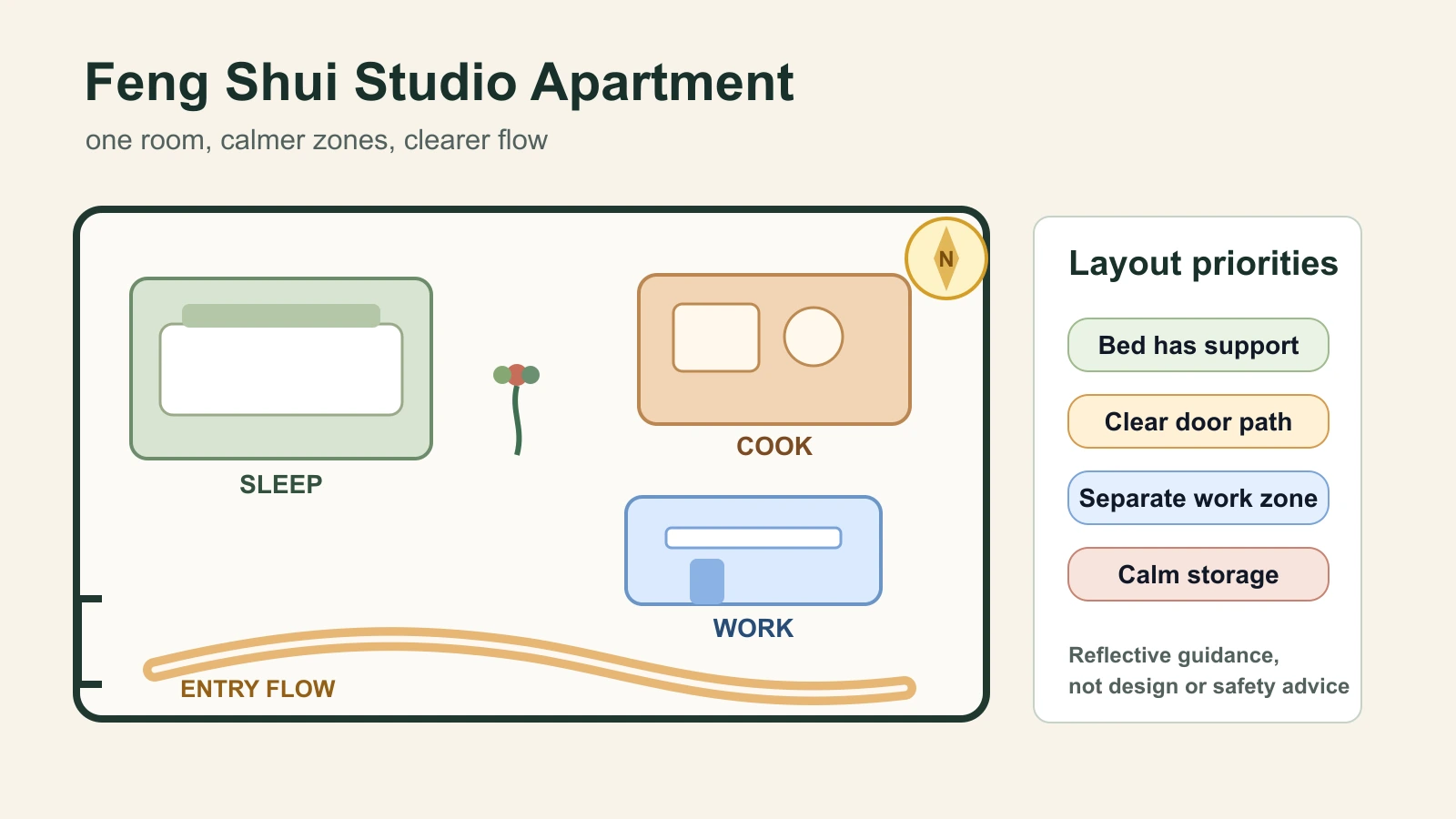
When people search for feng shui in studio apartment layouts, the real problem is usually not one object or one cure. It is that sleeping, working, cooking, storage, and entry flow all happen inside one visual field.
A useful studio apartment Feng Shui check starts by creating clearer zones, protecting rest, keeping the entry path calm, and reducing visual noise. It should feel practical before it feels symbolic.
Why Studio Apartments Need A Different Feng Shui Check
The Feng Shui Wiki explains the broader practice, and the Qi Energy Wiki is useful for thinking about movement and attention. In a studio, that movement is compressed. Every object can affect several daily activities at once.
That is why studio Feng Shui is less about decorating every corner and more about making the room legible. The bed should not dominate the first view from the door. The desk should not keep the body in work mode all night. The kitchen should not make the sleeping zone feel busy. The entry should not become the storage overflow point.
If you already read the Bedroom Feng Shui Wiki, treat this guide as the studio-wide companion. Bedroom rules still matter, but a studio also has to balance sleep with work, cooking, guests, and storage in the same room.
Zone The Bed, Door, Kitchen, And Desk
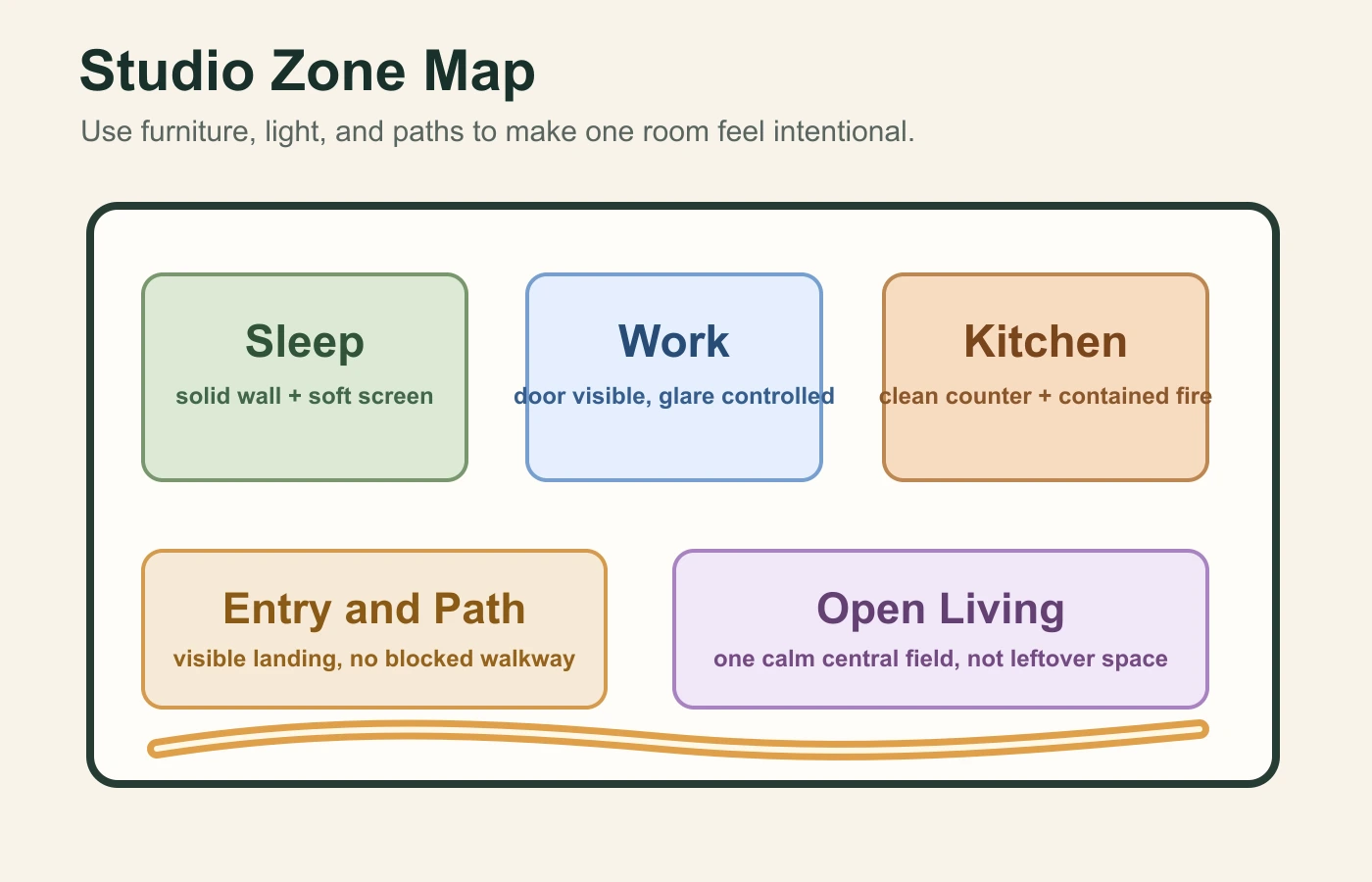
Start with zones before buying remedies. You do not need full walls. A rug, lamp, bookcase, curtain, screen, plant, or furniture back can mark a boundary well enough.
| Studio area | Feng Shui goal | Practical adjustment |
|---|---|---|
| Entry | Make the first view calm and usable | Keep shoes, bags, trash, and delivery boxes from taking over the doorway |
| Bed | Create rest, support, and privacy | Place the headboard against the strongest wall and soften direct door lines |
| Desk | Keep focus separate from sleep | Face a stable view when possible and avoid making the bed the main work backdrop |
| Kitchen | Contain heat, smell, and visual busyness | Reset counters, close storage, and keep bright appliances from dominating the room |
| Open path | Let movement feel easy | Preserve one clear route from entry to bed, desk, kitchen, and bathroom |
The Bagua Feng Shui Wiki can help you reflect on life areas, but do not force a perfect map onto a tiny floor plan. In a studio, daily function is the first quality gate.
Compare Common Studio Layout Choices
A studio apartment often asks for tradeoffs. Use this table to choose the least disruptive option, not a perfect one.
| Layout choice | When it helps | Watch point |
|---|---|---|
| Bed visible from the door | Works when the room is tiny and the bed has strong wall support | The first view may feel too private or exposed |
| Bed partly screened | Creates a stronger rest boundary | Heavy screens can block light, airflow, or the walking path |
| Desk near a window | Supports focus and natural light | Glare can create tension, especially for evening work |
| Sofa or table between bed and kitchen | Creates a social middle zone | Too much furniture can make qi feel stuck |
| Storage wall near the entry | Keeps the room organized | Open shelves can make the first impression feel noisy |
If your biggest question is the bed itself, the Feng Shui And Bed Placement Guide goes deeper into door visibility, wall support, and window checks. For a studio, use that article only after you understand how the whole room flows.
Use Light, Plants, Screens, And Storage Carefully
Studio apartments often get crowded when every fix becomes another object. The best cure may be subtraction: fewer visible boxes, fewer cables, fewer duplicate lamps, fewer items under the bed, and fewer things competing for attention near the entry.
Light is a good first remedy. A warm lamp near the bed, a brighter task light near the desk, and softer entry lighting can tell the body which mode the space is in. This is more useful than one large overhead light that makes every zone feel the same.
Plants can also help, especially when they soften corners, separate the bed from the work area, or bring life to a harsh view. Keep them healthy and proportional. A large dying plant in a narrow entry creates more stress than support.
Screens and curtains are useful when they create privacy without choking the room. Avoid blocking the only window, the main walking path, or the airflow around a heater, radiator, or appliance.
Run A Simple Studio Apartment Audit
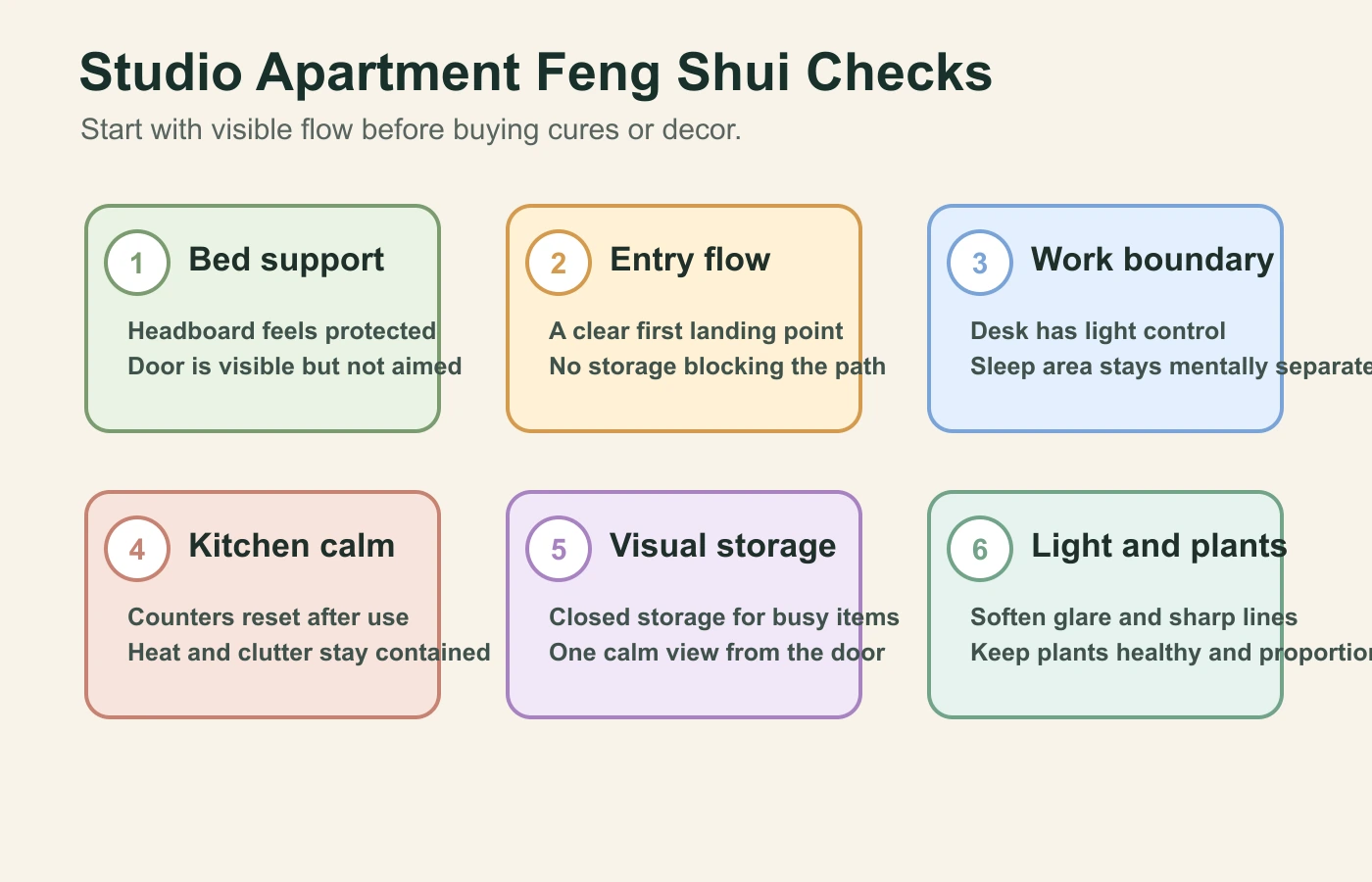
Walk through the room in this order:
- Open the door and name the first three things your eye sees.
- Check whether the bed feels protected without blocking the room.
- Sit at the desk and notice whether work energy points toward the bed.
- Stand in the kitchen and see whether clutter is visually spilling into rest or work zones.
- Trace the main walking path from entry to bed, desk, kitchen, and bathroom.
- Turn on evening lighting and check whether the room can shift from active to restful.
- Remove one visual distraction before adding any new object.
The goal is not to hide the reality of a small home. The goal is to make the room easier to read and easier to live in.
Where FateFolio Fits
FateFolio's home Feng Shui reading is helpful when a studio apartment question depends on the actual floor plan, entry direction, window position, building context, or photos. A map or image-based reading can compare the room as a whole instead of treating the bed, desk, and kitchen as separate problems.
That matters when:
| Situation | Why a reading helps |
|---|---|
| The bed has only one possible wall | The reading can prioritize the least disruptive protection |
| The entry opens straight into the bed | A visual review can compare screen, rug, lighting, and storage options |
| Work and sleep keep blending together | The reading can identify the strongest boundary points |
| The kitchen visually dominates the room | Photos can show whether storage, light, or layout is the main issue |
| You are choosing between two layouts | Map and image context can make the tradeoffs clearer |
Check your studio apartment in context
Use FateFolio home Feng Shui to review your room layout, entry flow, bed position, work zone, photos, map context, and practical goals.
Practical Takeaway
Feng Shui in a studio apartment works best when one room becomes several calm zones. Protect the bed, keep the door path clear, separate work from rest, reset the kitchen visually, and use light or storage to change the room's mood through the day.
Start with the smallest reversible change. Move one storage pile, adjust one lamp, clear one entry line, or make the bed area feel more protected for a week before buying a large divider or rearranging everything.
FAQ
How do I feng shui a studio apartment?
Start by zoning the room. Protect the bed, clear the entry path, separate work from rest, keep the kitchen visually calm, and use lighting or storage to make each area feel intentional.
Should my bed be hidden in a studio apartment?
It does not have to be fully hidden. It should feel supported and not overly exposed from the door. A rug, curtain, screen, shelf, or lighting change can create enough separation.
Is a mirror bad in a studio apartment?
A mirror is not automatically bad. Check what it reflects, whether it makes the bed feel exposed, and whether it adds clarity or visual busyness. Safety and lease rules matter too.
What Wiki pages support this topic?
Start with Feng Shui, Qi Energy, Bagua Feng Shui, and Bedroom Feng Shui. They are adjacent references, not duplicate versions of this studio layout guide.
Can FateFolio tell me the best layout for my exact studio?
FateFolio can help review your room context, photos, map, goals, and visible layout tradeoffs. Treat the result as reflective guidance, not a guarantee or professional design instruction.

About the editor
FateFolio Editorial
FateFolio Editorial
FateFolio Editorial writes plain-language notes on Bazi, I Ching, Feng Shui, readings, and timing—with the reasoning and limits kept in view.
Related posts
Feng Shui Declutter Guide for Home Energy
Use a Feng Shui declutter checklist to clear stagnant corners, reset entry flow, and decide when a full home map reading would help.
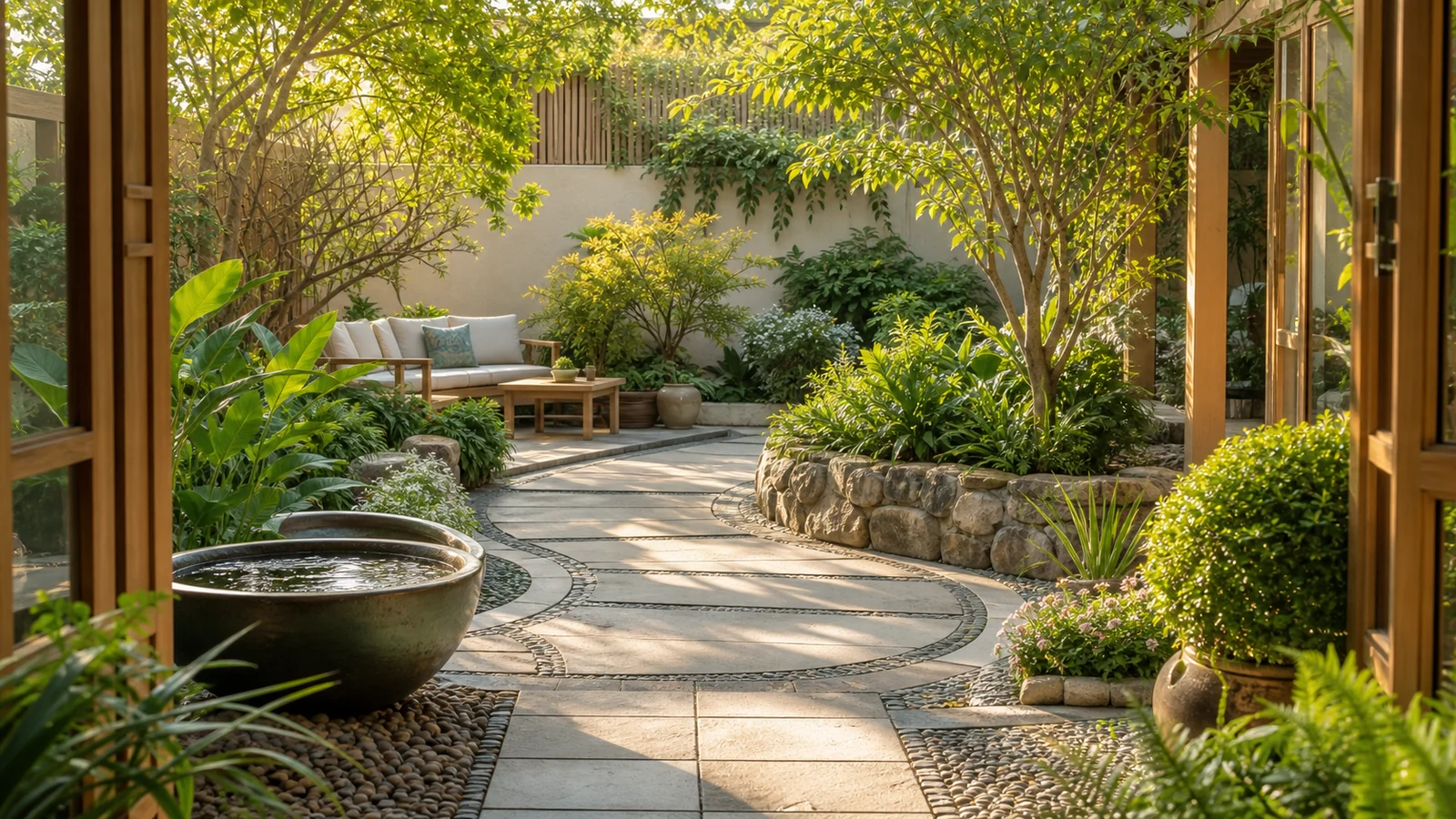
Feng Shui Garden Layout Guide for Outdoor Balance
Learn Feng Shui garden layout, paths, plants, elements, water features, and when a home Feng Shui map reading adds context.
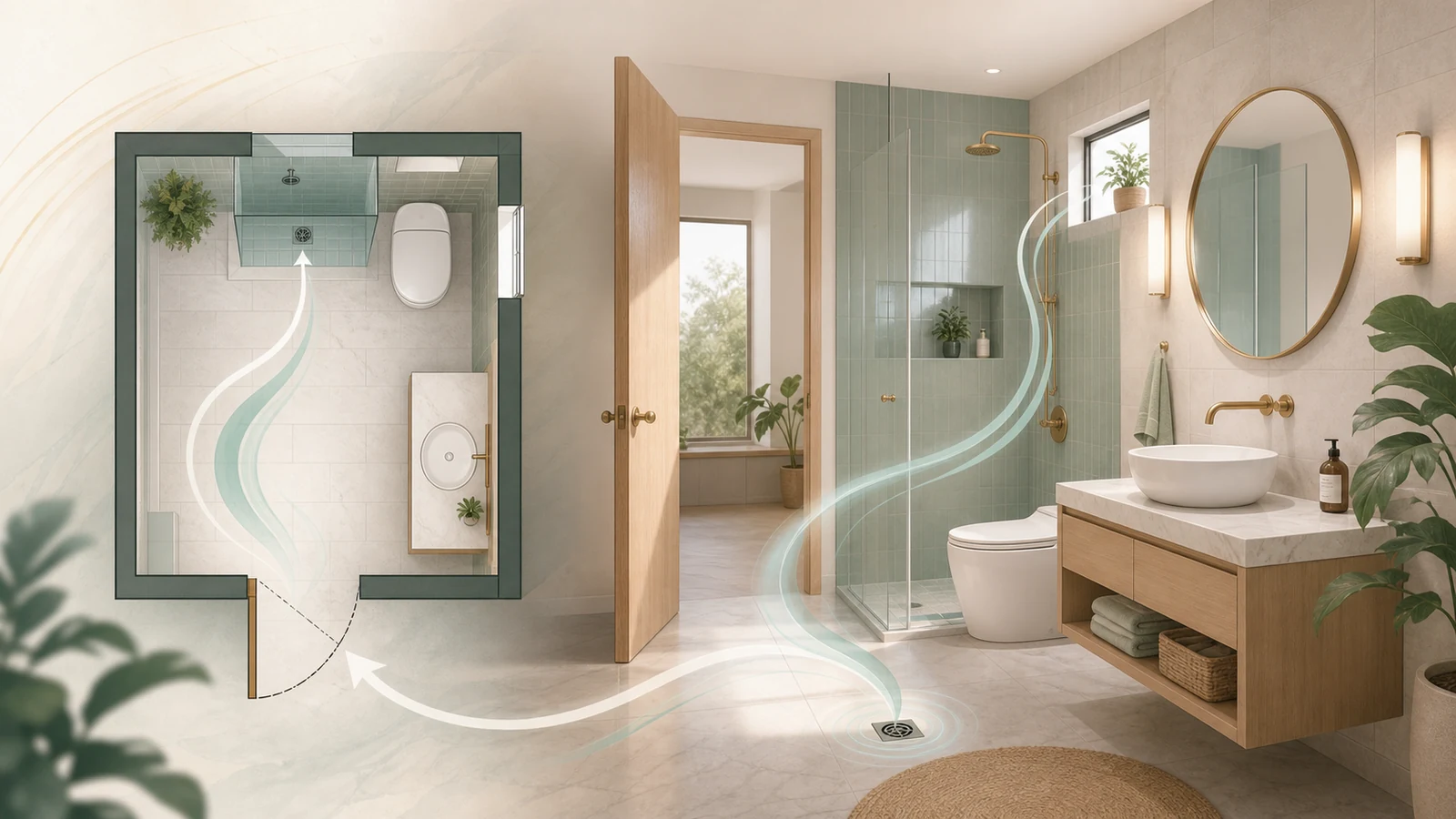
Feng Shui And Bathrooms Practical Guide
Learn Feng Shui bathroom rules, placement checks, drain and door concerns, and when a home Feng Shui reading adds context.