Feng Shui And Bed Placement Guide
Learn how to place a bed with door visibility, wall support, window checks, and balanced sides before using a Feng Shui home reading.
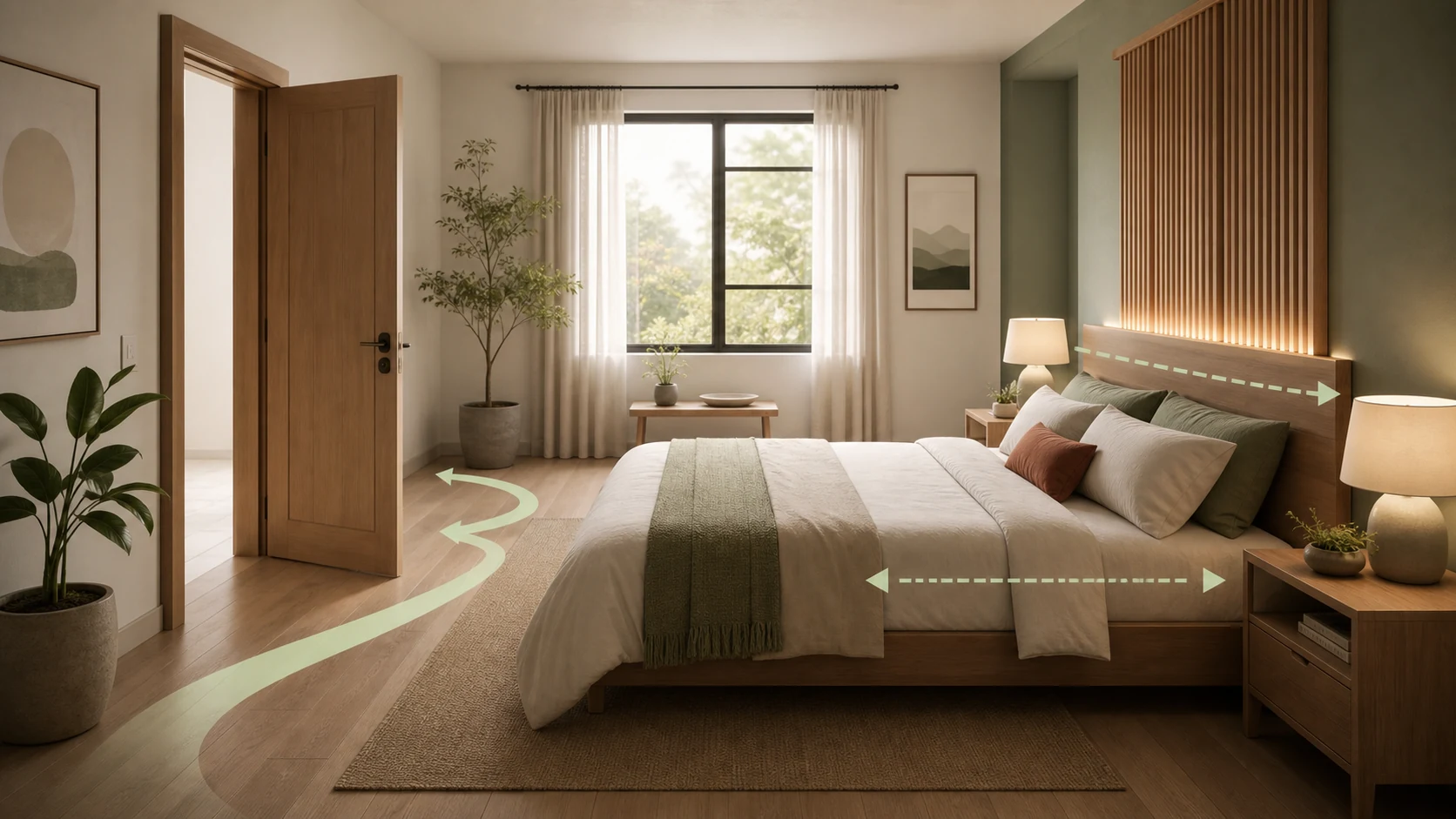
Feng shui and bed placement are really about how supported, visible, and restful the sleeping position feels. A good layout usually lets you see the door without lying directly in line with it, keeps the headboard supported, and leaves the room easy to move through.
No single rule can judge every bedroom. Door position, window light, wall support, room size, and daily habits all change the answer.
The Basic Bed Placement Goal
The usual goal is a calm command position. In plain language, that means the bed has support behind it, the door is visible, and the body is not placed directly in the strongest path of movement.
The Bedroom Feng Shui Wiki covers the broader bedroom concept. This article focuses on the specific bed-position workflow so it does not simply repeat the wiki.
Start with three questions:
- Can you see the door from bed without being straight in line with it?
- Does the headboard sit against a solid wall?
- Can both sides of the bed breathe, even if one side is tighter than ideal?
Compare The Common Bed Positions
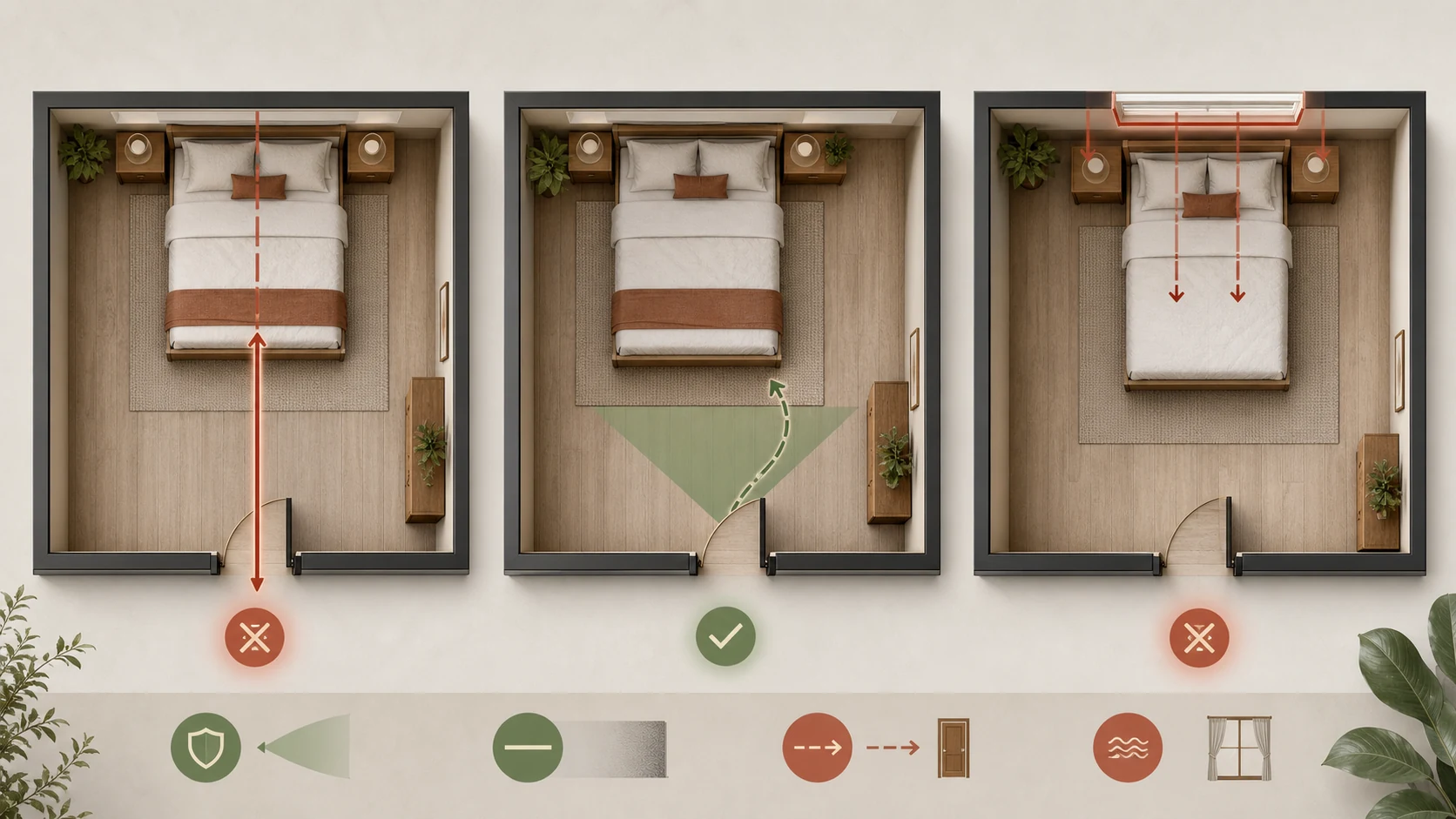
Use this table as a practical triage before moving furniture.
| Bed position | Feng Shui concern | Better adjustment |
|---|---|---|
| Bed directly in line with the door | Movement feels aimed at the body | Shift the bed off the door line if the room allows |
| Bed can see the door but is offset | Usually the most stable starting point | Add balanced lighting and keep the path clear |
| Headboard under a window | Support may feel weaker and light may disturb sleep | Use a solid headboard, curtains, or a different wall |
| Bed floating without a wall | Can feel exposed or unsettled | Place the headboard against the strongest available wall |
| One side trapped against a wall | Movement and relationship balance may feel tight | Add a small aisle or balance the other side visually |
The Sitting And Facing Wiki can help when a room's active direction is confusing, but for bed placement the daily door and walking path usually matter more than a formal compass label.
Door, Window, And Wall Checks
Door, window, and wall support are the first layer. Decorative cures come later.
Check the door first. If the bed is directly opposite the door, the room may feel visually tense because movement enters the room and points straight at the sleeping position. If moving the bed is impossible, soften the line with a rug, screen, footboard, bench, or clearer visual landing point.
Check the window next. A window behind the headboard can feel exposed, and strong light may affect actual rest. Curtains, a stable headboard, and a calmer night routine can help when the room has no better wall.
Then check the headboard wall. A solid wall behind the head supports the feeling of rest. The Qi Energy Wiki is a helpful reference because it frames the room as movement and attention, not just objects.
Make The Bed Feel Balanced
A balanced bed is not always symmetrical in a perfect interior-design sense. It simply gives both sides enough access, light, and calm.
Useful low-risk adjustments include:
- Keep a small path on both sides when the room allows.
- Use two modest bedside surfaces, or one surface plus a visual counterpart.
- Avoid stacking storage directly over the headboard.
- Keep sharp furniture corners away from pillow height.
- Make the first view from the door clean and restful.
This is also where the Feng Shui Desk Window Perpendicular Placement Guide can be useful. Desks and beds are different, but both require support, light control, and a clear relationship to the door.
A Simple Bedroom Audit
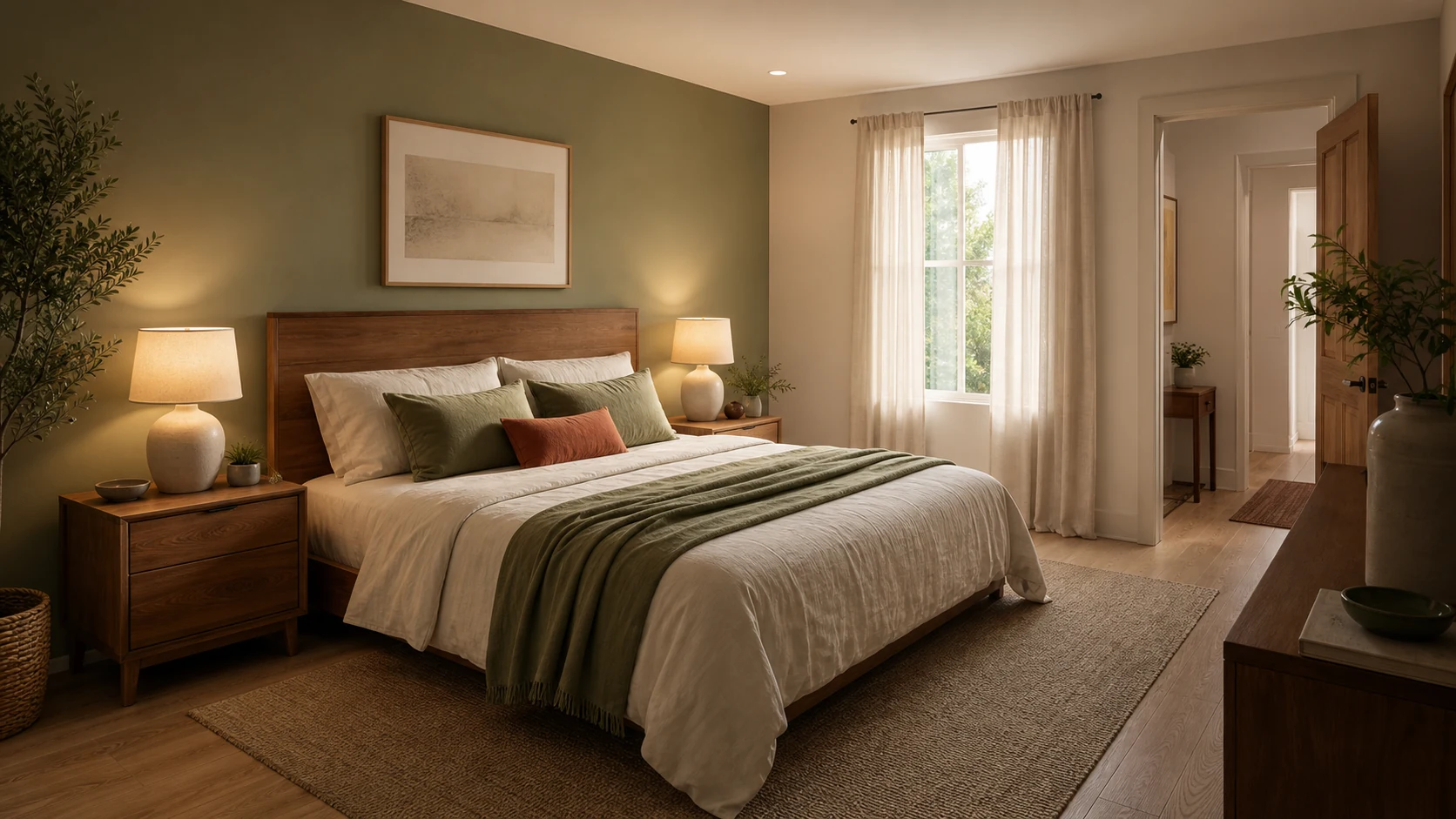
Before buying anything, walk through this checklist:
- Open the bedroom door and notice the first object your eye meets.
- Lie on the bed and check whether the door is visible without feeling directly aimed at you.
- Look behind the headboard. Prefer a wall, not a busy window or open gap.
- Check the window. Is light helpful, harsh, or sleep-disrupting?
- Walk around the bed. Does movement feel easy, cramped, or blocked?
- Remove items that make the first view from the door feel busy.
- Test the change for a few nights before making a larger layout decision.
For broader house context, compare this with the South Facing House Feng Shui Guide, especially if bedroom light, heat, or exterior exposure is part of the problem.
Where FateFolio Fits
FateFolio's home Feng Shui map reading helps when bed placement is not just a furniture question. The tool can consider residence type, goals, photos or map context, and the room's visible relationship to doors, windows, paths, and surrounding forms.
That is useful when:
| Situation | Why a reading helps |
|---|---|
| The room has only one possible wall | The reading can prioritize the least disruptive fix |
| A window, door, and closet compete | Visual context helps compare tradeoffs |
| You want better sleep but cannot renovate | Low-risk changes become more important |
| The bedroom connects to wider home flow | Map and photo context can show the path into the room |
| You are choosing between two layouts | The decision can be framed around support, flow, and daily use |
Check your bedroom layout in context
Use FateFolio home Feng Shui to review bed placement, door and window relationships, visible room flow, residence type, and practical goals.
Practical Takeaway
The best Feng Shui bed placement is usually steady, visible, and easy to live with. Put the headboard against support, keep the door in view without lying in the strongest door line, soften windows and glare, and make the path around the bed calm.
If the room cannot be perfect, choose the lowest-risk improvement first. A small shift, a better headboard, cleaner entry view, or softer light often matters more than dramatic cures.

About the editor
FateFolio Editorial
FateFolio Editorial
FateFolio Editorial writes plain-language notes on Bazi, I Ching, Feng Shui, readings, and timing—with the reasoning and limits kept in view.
Related posts
Feng Shui Sofa Placement Guide
Learn where to place a sofa in Feng Shui, what to avoid, and how to balance wall support, entry view, traffic flow, and comfort.
Feng Shui Money Tree Placement Guide
Learn where to place a feng shui money tree, what to avoid, and how to connect wealth symbolism with real room conditions.
Feng Shui Dragon Statue Placement Guide
Learn where a Feng Shui dragon statue fits, what it symbolizes, when to avoid it, and how FateFolio reads the full home context.