Feng Shui Jade Plant Placement Guide
Learn Feng Shui jade plant placement, what to avoid, how it differs from Money Tree advice, and why real plant care comes first.
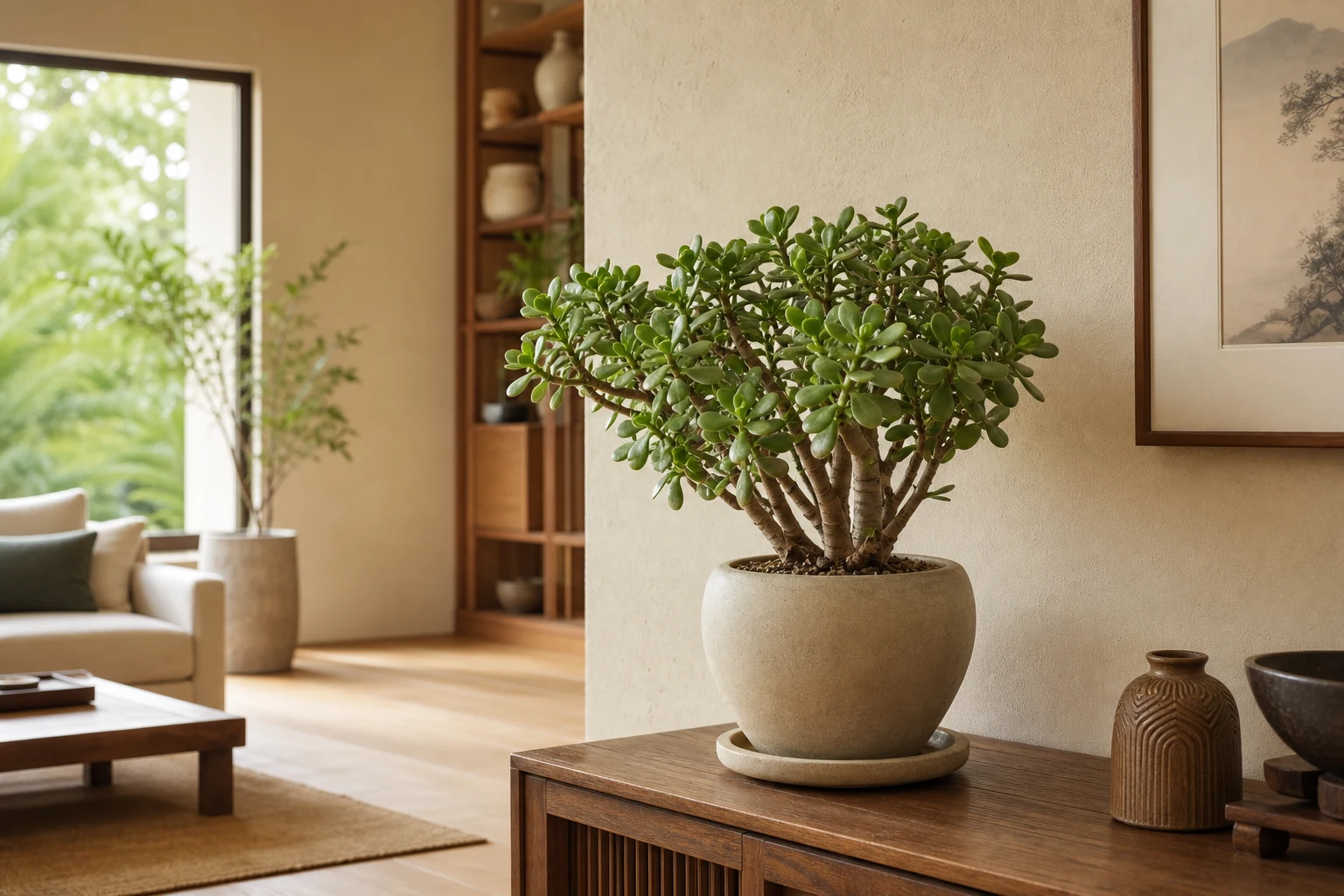
A Feng Shui jade plant works best when the living plant and the room both support the placement. Start with light, drainage, stability, and a clear walking path. Then use Feng Shui symbolism to decide whether the spot also feels intentional, welcoming, and easy to maintain.
The jade plant, commonly known as Crassula ovata, is often associated with growth and prosperity because of its rounded leaves and steady form. Treat that symbolism as a reflective cue, not a promise that one plant can change income, health, or luck.
Quick Jade Plant Placement Answer
For many homes, a jade plant fits best in a bright living-room side corner, a protected entry-side position, or a calm work-area edge. The best spot has enough light for the plant, enough room for its branches, and enough clearance that people do not brush past it.
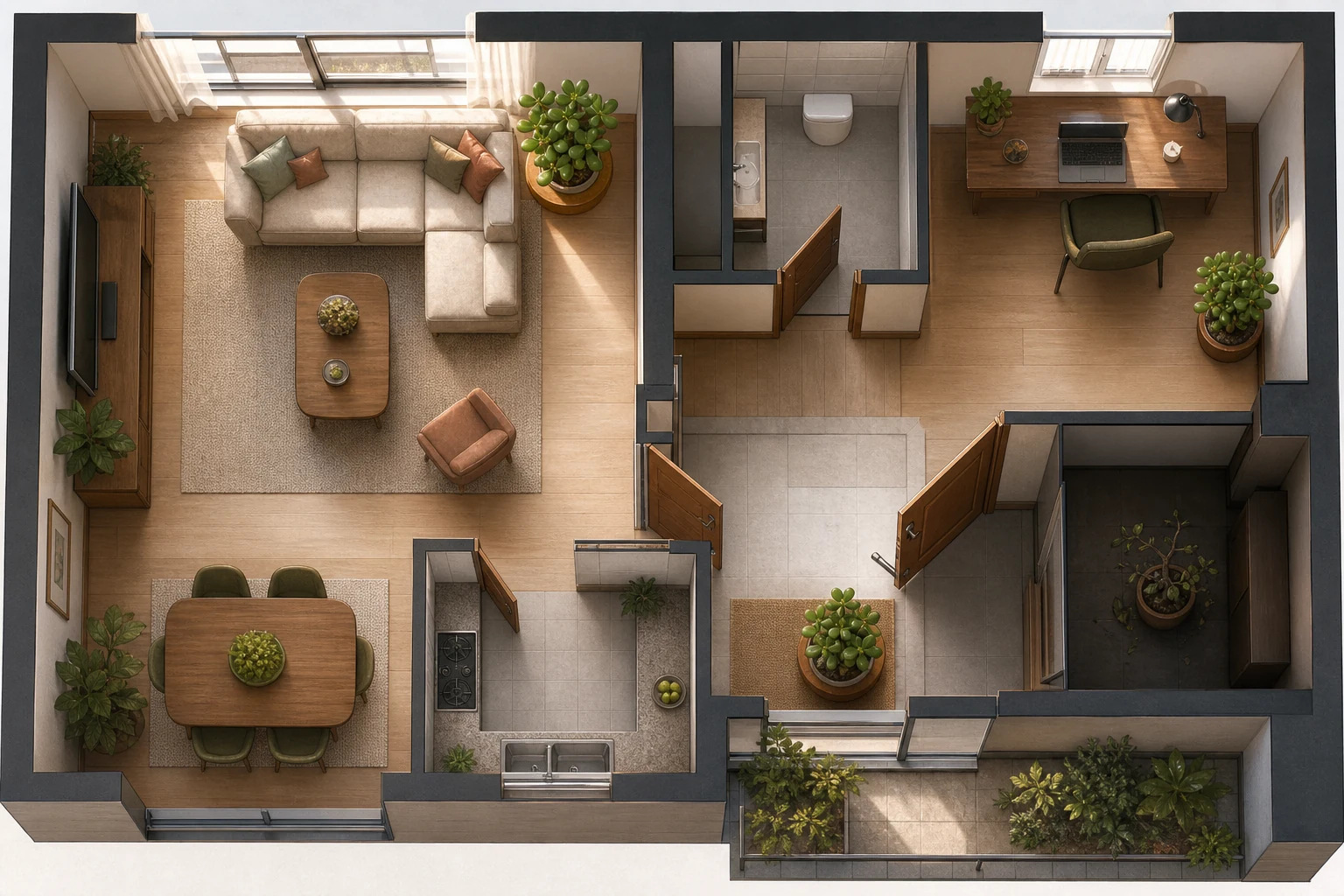
| Placement choice | Why it can work | Check before placing |
|---|---|---|
| Bright living-room corner | Visible, calm, and easy to care for | Make sure the plant is not squeezed behind furniture |
| Entry-side position | Creates a cared-for arrival point | Keep the door swing and walking path fully open |
| Work-area side | Connects the plant with steady daily effort | Keep leaves away from screens, cables, and chair movement |
| Southeast area | Can support a traditional growth or wealth intention | Do not use it if the corner is dark, cramped, or neglected |
| Window-side surface | Provides useful light in many homes | Watch heat, cold, and the plant's actual response |
The Wealth Position wiki explains why prosperity corners appear in Feng Shui practice. This guide has a narrower job: deciding whether a jade plant can live well in the proposed spot.
Let Plant Care Eliminate Bad Locations First
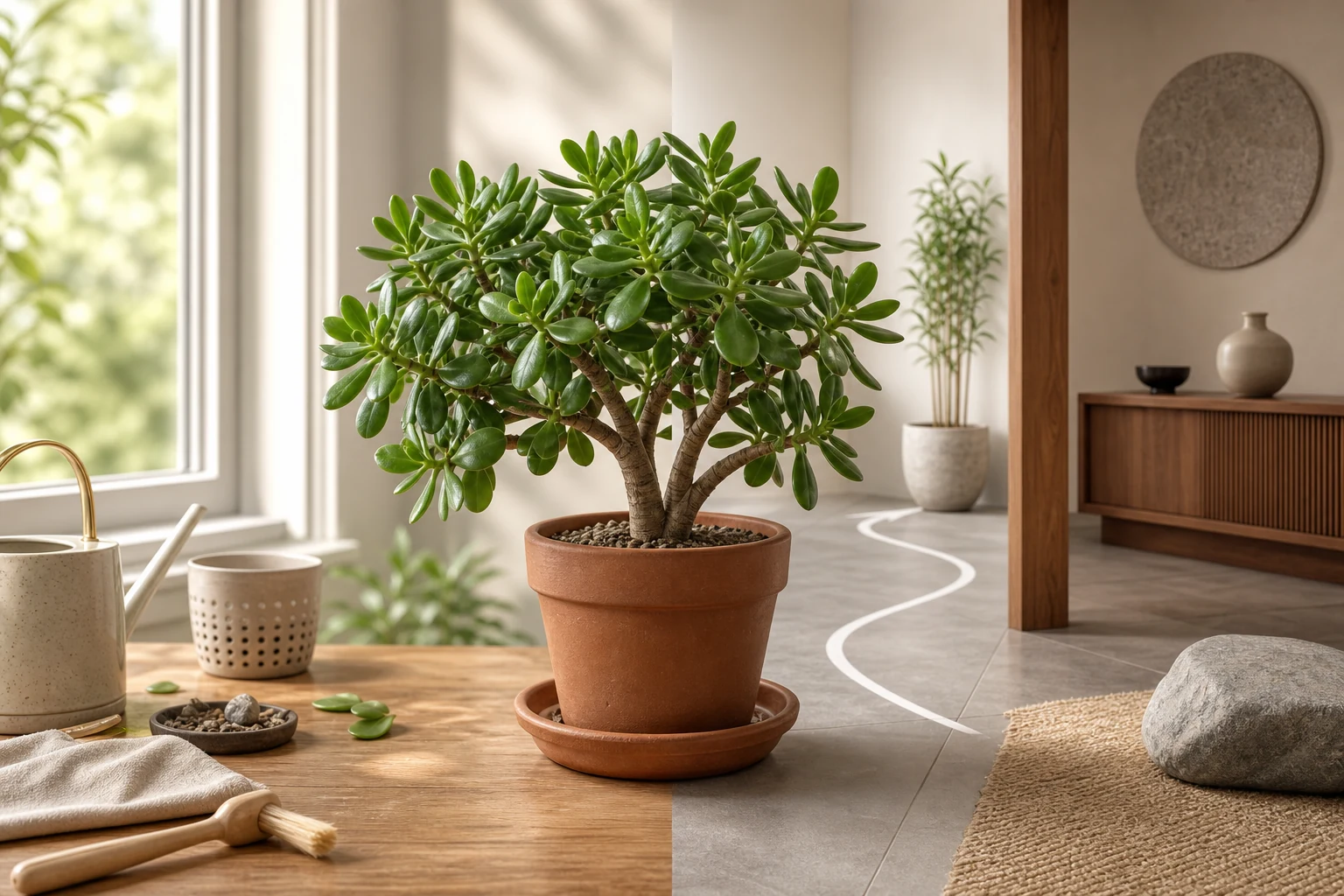
Before thinking about direction, remove locations that make the plant hard to care for. Jade plants are succulents with fleshy leaves and stems, so a pot that drains, a stable surface, and an appropriate light routine matter more than symbolic decoration.
Use this order:
- Identify the brighter, stable places where the plant could realistically stay.
- Remove any spot that blocks a doorway, cabinet, chair, or walking route.
- Check that the pot and surface can handle ordinary watering without creating a mess.
- Leave enough space around the branches so the plant is not repeatedly knocked or compressed.
- Compare the remaining options with the room's function and your Feng Shui intention.
If the plant starts stretching, dropping leaves, leaning, or looking stressed, reassess the real conditions instead of adding symbolic objects. The point is to care for a living plant, not to preserve a theory at the plant's expense.
What The Jade Plant Symbolizes In Feng Shui
The jade plant's rounded leaves are commonly read as a visual symbol of stored growth, continuity, and resource care. Its dense branching can also suggest patience: it develops over time rather than delivering instant change.
The Five Elements in Feng Shui gives a useful framework for this symbolism. The living plant is often discussed through Wood qualities such as growth and vitality, while the pot, color, room material, direction, and use of the space can add other elemental layers.
This does not mean every jade plant belongs in the same compass sector. A home office, living room, shop entrance, and bedroom have different practical jobs. Feng Shui placement should respond to the whole space rather than applying one label to every floor plan.
The Qi wiki is helpful here: a plant should support the room's movement and attention. If the pot narrows a path, hides behind clutter, or becomes one more object to maintain, the placement is working against that goal.
Compare Common Rooms And Corners
| Room or area | Good fit when | Poor fit when |
|---|---|---|
| Living room | The plant is visible, proportional, and receives suitable light | It crowds seating or becomes hidden behind a large sofa |
| Entry | It creates a calm arrival and stays protected | Bags, coats, pets, or the door repeatedly hit it |
| Home office | It sits beside the work zone without blocking tools | It competes with the monitor, chair, or cable path |
| Dining area | It adds a living focal point away from serving space | Watering or soil makes the eating area inconvenient |
| Bedroom | A small plant fits without adding visual pressure | The room is already crowded, dark, or difficult to maintain |
| Southeast corner | The location is both plant-friendly and symbolically meaningful | The direction is being followed despite weak light or poor access |
Use the table as a shortlist, not a rulebook. Two homes with the same compass direction can need different choices because windows, room use, furniture, climate, and daily routines differ.
What To Avoid And How This Differs From A Money Tree
Avoid turning the jade plant into a fear-based cure. A dry leaf, a moved pot, or the wrong decorative color is not proof of future financial loss. The useful question is whether the plant and the space are being cared for consistently.
Common problems include:
- forcing the plant into a dark wealth corner;
- narrowing the entry path with an oversized pot;
- placing it on an unstable or water-sensitive surface;
- surrounding it with cluttered prosperity objects;
- buying a weak plant only because its shape looks symbolic;
- copying another home's Bagua placement without checking your own layout.
The published Feng Shui Money Tree Placement Guide covers a different plant and search job. Both articles put living conditions before symbolism, but this guide stays specific to the jade plant's succulent form, compact branching, pot stability, and placement scale. Do not treat the names "jade plant" and "money tree" as interchangeable.
Where FateFolio Fits
One plant can reveal useful room questions: Where does light enter? Which path gets crowded? Which corner is neglected? Does the room feel stable, active, welcoming, or visually noisy?
FateFolio's home Feng Shui map reading is a better next step when the answer depends on the floor plan, entrance, facing direction, roads, surrounding buildings, or photos of the actual space. It reviews a broader home context rather than promising that one object will fix it.
FateFolio Feng Shui
Review the whole room before choosing one lucky corner
Use FateFolio home Feng Shui to compare layout, direction, entry flow, surrounding forms, and practical placement options.
Practical Takeaway And FAQ
Feng Shui jade plant placement works best as a two-stage decision. First, choose a location where the jade plant can remain healthy and easy to care for. Then use wealth-position, Five Elements, and qi-flow ideas to compare the remaining options.
Where should I place a jade plant for Feng Shui?
Start with a bright, stable, uncluttered location such as a living-room side corner, protected entry area, or work-area edge. A southeast position can be symbolically meaningful, but only when the plant can thrive there.
Can a jade plant go near the front door?
Yes, when it does not block the door, narrow the walking path, or get hit by bags and traffic. A slightly less symbolic spot is better if it keeps the plant healthy and the entry usable.
Is a jade plant the same as a money tree?
No. Jade plant usually refers to Crassula ovata, a succulent. Money tree usually refers to Pachira aquatica. They have different forms and care needs even though both can carry prosperity symbolism.
Does a jade plant guarantee wealth?
No. Feng Shui symbolism can support intention and reflection, but it does not guarantee financial results. Treat the plant as a living reminder of care, patience, and orderly space.

About the editor
FateFolio Editorial
FateFolio Editorial
FateFolio Editorial writes plain-language notes on Bazi, I Ching, Feng Shui, readings, and timing—with the reasoning and limits kept in view.
Related posts
Feng Shui Money Tree Placement Guide
Learn where to place a feng shui money tree, what to avoid, and how to connect wealth symbolism with real room conditions.
Feng Shui Dragon Statue Placement Guide
Learn where a Feng Shui dragon statue fits, what it symbolizes, when to avoid it, and how FateFolio reads the full home context.
Feng Shui Sofa Placement Guide
Learn where to place a sofa in Feng Shui, what to avoid, and how to balance wall support, entry view, traffic flow, and comfort.